Proudly serving Phoenix, Scottsdale, Mesa, Chandler, Gilbert, Tempe & surrounding areasCall or Text 24/7: 480-264-9663
Aerial view of a residential neighborhood with saguaros and desert foothills in Phoenix, AZ.

Commercial Epoxy Flooring for Phoenix, AZ Retail and Warehouse Spaces

Phoenix Epoxy Co. installs commercial epoxy flooring for Phoenix facilities that need a durable, seamless surface over concrete. We build systems for warehouses, manufacturing floors, showrooms, retail spaces, and other business environments. Available options include industrial epoxy flooring, polyaspartic floor coatings, metallic epoxy, and epoxy flake finishes. Each coating is selected for the slab condition, traffic load, and chemical exposure of the space.

Phoenix slabs face intense surface heat, UV exposure, thermal cycling, and monsoon moisture that can exploit hairline cracks. Our crews screen for moisture and adhesion concerns before using diamond grinding to create the mechanical profile a coating needs. We work with 100% solids epoxy base coats, polyaspartic topcoats, and decorative pigment systems instead of applying one formula to every floor. That preparation helps prevent the peeling and delamination commonly tied to shortcuts on concrete.

Every estimate documents square footage, the preparation method, specified mil thickness, and the expected cure schedule so facility teams can compare scope and plan downtime.

Phoenix Epoxy Co. installs commercial epoxy flooring in Phoenix, Scottsdale, Tempe, Mesa, Chandler, Glendale, and the greater Maricopa County metro area.

★ ★ ★ ★ ★4.9/5 Average Rating · 20+ Years of Experience · Thousands of Customers Helped · Licensed & Insured · Residential & Commercial

Commercial Epoxy Flooring Options & Benefits

What Is Commercial Epoxy Flooring?

Commercial epoxy flooring is a resin-based system bonded to mechanically prepared concrete. Primer, a 100% solids epoxy base coat, and a protective topcoat can create a monolithic surface without the grout lines that collect moisture, bacteria, and debris.

System design matters in Phoenix, where unshaded slab surfaces can regularly climb past 140 degrees. UV exposure, heat-cool cycling, expansive clay soils, and moisture moving into cracks all affect how the concrete should be tested and prepared.

The finish can be tailored to facility use with chemical-resistant matrices, slip-resistant aggregate, decorative flake, metallic pigment, or a UV-resistant polyaspartic topcoat. Concrete polishing, staining, and grind-and-seal finishing are also available when a full coating buildup is not the right fit.

Benefits of Commercial Epoxy Flooring

A correctly specified epoxy system protects the slab while making day-to-day cleaning, traffic control, and facility appearance easier to manage. The most valuable combination depends on how the floor is used.

  • Typical service life of 10 to 20 years, depending on traffic and maintenance
  • Seamless surfaces that simplify washdown and sanitation routines
  • Resistance to oil, gasoline, hydraulic fluid, and common industrial cleaners
  • Slip-resistant additives for areas exposed to water, oil, or coolant
  • Reflective finishes that improve visual clarity for aisles and safety striping
  • Protection against recurring dust mitigation, patching, and premature slab replacement
  • Decorative options for showrooms, retail floors, restaurants, and lobbies
  • Straightforward care with sweeping, damp mopping, and prompt spill cleanup
Flooring Services

Commercial Flooring Services

Phoenix Epoxy Co. matches each finish to the concrete, operating schedule, traffic, exposure, and appearance goals of the facility. Our service range covers high-load industrial systems, fast-curing coatings, decorative finishes, and lower-build concrete alternatives.

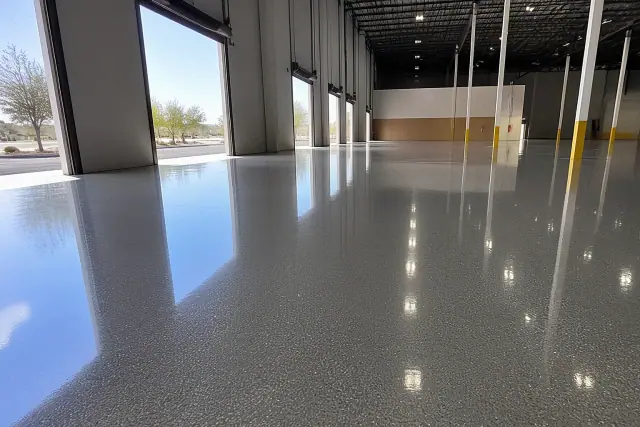
Commercial Epoxy Flooring

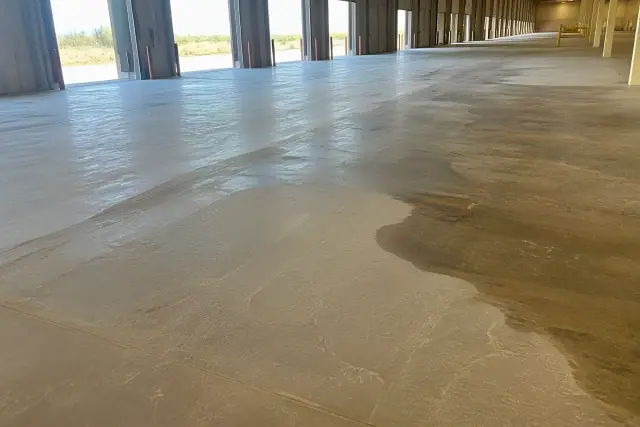
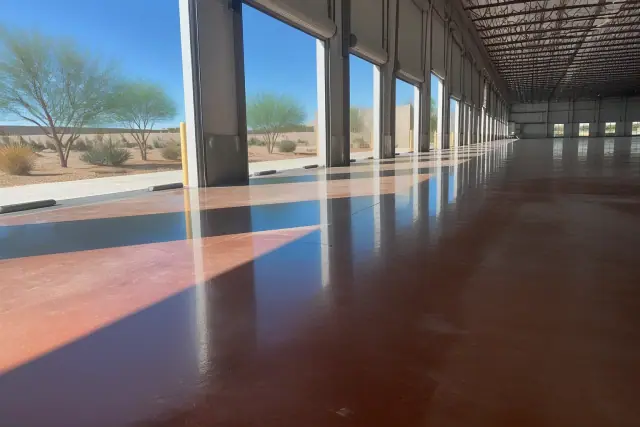
Glossy seamless epoxy flooring in a Phoenix, AZ warehouse with desert landscaping visible through open bay doors.

Commercial systems protect concrete in warehouses, retail spaces, showrooms, offices, and other working facilities. The coating build is selected around actual traffic, maintenance, and exposure needs so a lighter-use floor is not over-specified.

Request Estimate

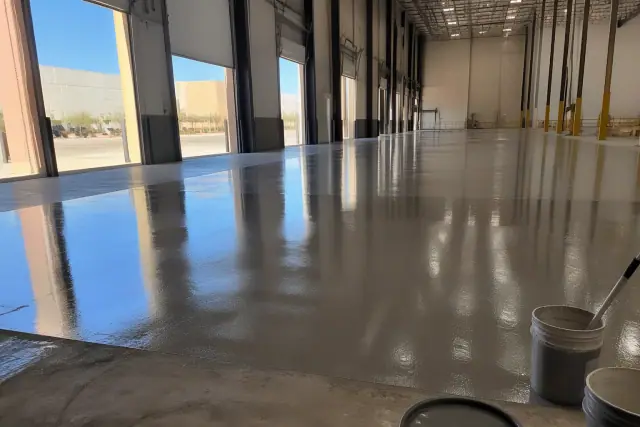
Industrial Epoxy Flooring

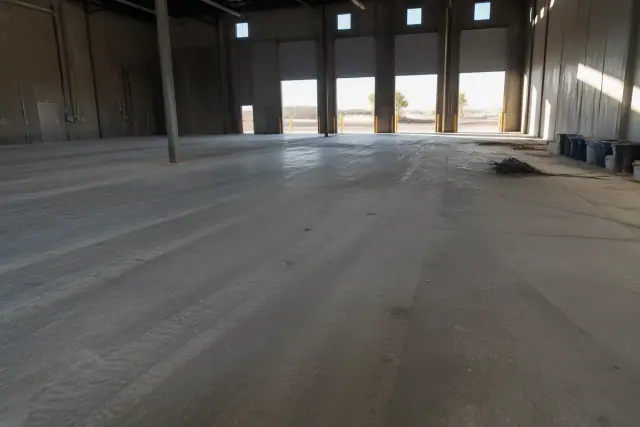
Industrial epoxy flooring in mid-cure state with roller texture inside a warehouse in Phoenix, AZ.

Industrial-strength systems are built for pallet jacks, forklifts, rack-leg point loading, and repeated exposure to oils or cleaners. A chemical-resistant matrix and proper thickness help prevent cratering, staining, and breakdown in manufacturing, automotive, aerospace, and warehouse settings.

Request Estimate

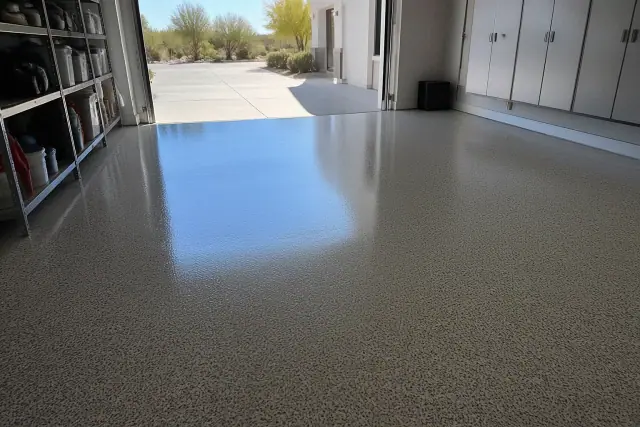
Polyaspartic Floor Coatings

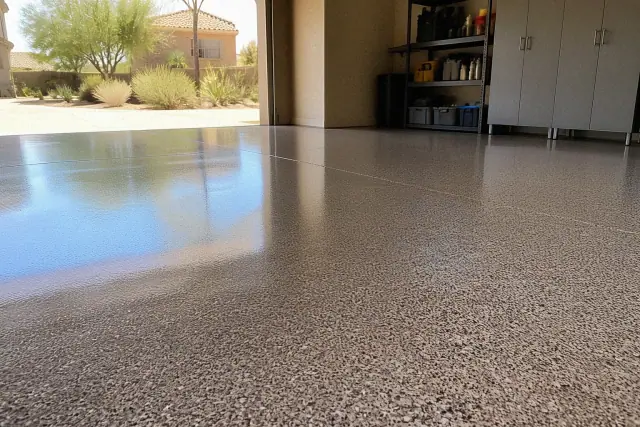
High-gloss, speckled polyaspartic floor coating in a Phoenix, AZ residential garage.

Polyaspartic coatings cure quickly, retain color and gloss longer under UV exposure, and work across a wider application-temperature range than standard epoxy. They are a practical topcoat choice for loading docks, covered patios, retail entries, and businesses that need to limit downtime.

Request Estimate

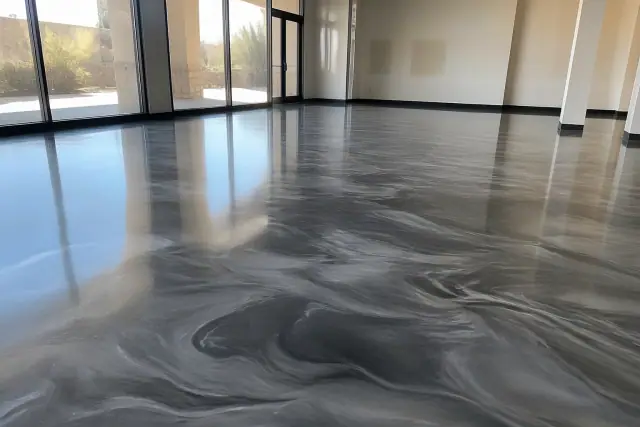
Metallic Epoxy Flooring

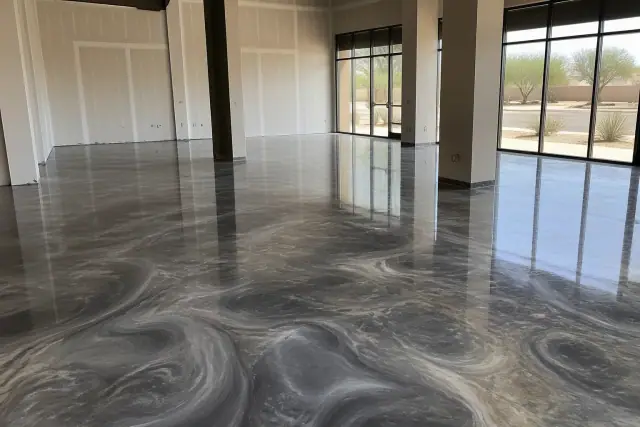
Cured metallic epoxy flooring in a retail space with desert sunlight visible through windows in Phoenix, AZ.

Mica-based pigments are manipulated in clear epoxy to create layered, marbled effects that vary with every pour. The result combines protective flooring with a high-end visual finish suited to showrooms, dealerships, restaurants, retail areas, and client-facing lobbies.

Request Estimate

Concrete Polishing, Staining, and Sealing

Unfinished concrete floor undergoing polishing and staining inside a logistics warehouse in Phoenix, AZ.

Mechanical polishing creates a dense, reflective surface without a topical coating, while acid or water-based stains produce variegated color that penetrates the slab. Grind-and-seal service pairs mechanical grinding with a penetrating sealer for existing floors that do not need a full epoxy buildup.

Request Estimate

Garage and Residential Epoxy Flooring

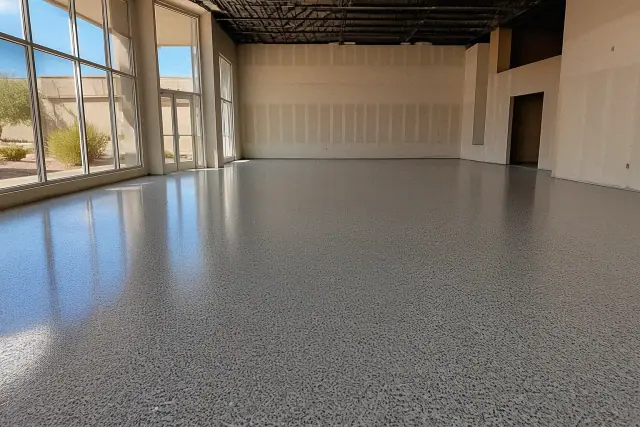
High-gloss epoxy garage flooring with grey flakes and visible exterior desert landscaping in Phoenix, AZ.

Residential epoxy and garage floor coatings can use standard epoxy, flake broadcast, metallic pigment, or a polyaspartic topcoat. The design depends on slab condition, vehicle exposure, sunlight, desired texture, and the level of decorative variation the owner wants.

Request Estimate
Coating and Finish Options

Commercial Floor Finish Options

The right finish balances concrete condition, operational loading, chemical contact, sunlight, cleaning requirements, appearance, schedule, and budget. These systems can be used alone or combined where the application calls for complementary properties.

Unfinished dusty concrete floor inside a logistics warehouse in Phoenix, AZ, prepared for an epoxy flooring system.

100% Solids Epoxy Systems

A penetrating primer and 100% solids epoxy base coat create a durable buildup over properly profiled concrete. The specified mil thickness is matched to traffic, point loads, and exposure rather than chosen from a one-formula package.

  • Penetrating primer over diamond-ground concrete
  • Base-coat thickness selected for the traffic load
  • Industrial options for forklift and rack-leg loading
  • Chemical-resistant matrices for oils, fluids, and cleaners
  • A seamless membrane for easier cleaning and sanitation
Request Estimate
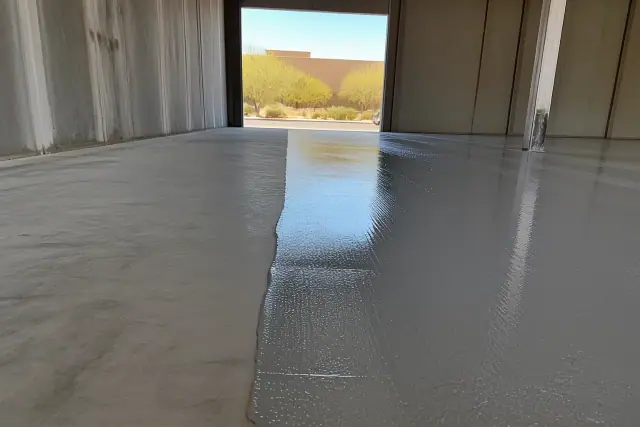
Polyaspartic floor coating being applied to concrete inside a warehouse with desert views in Phoenix, AZ.

Polyaspartic Topcoat Systems

Polyaspartic coatings can cure in hours instead of the days associated with standard epoxy and retain color and gloss longer in direct sun. Their wider application-temperature range is useful during Phoenix's 115-degree summer stretches and cooler winter mornings.

  • Fast cure for facilities that need to reduce downtime
  • Better UV stability for Phoenix's 300-plus sunny days each year
  • Useful for loading docks, entries, patios, and sunlit floors
  • Compatible with epoxy base coats in combined systems
  • Color and gloss retention under sustained sunlight
Request Estimate
Epoxy flake flooring installed in an empty retail space under bright sunlight in Phoenix, AZ.

Epoxy Flake Flooring

Decorative flake is broadcast into the base coat and sealed beneath the protective topcoat. It adds visual variation, can help disguise minor surface imperfections, and works well for garages and commercial spaces that want more texture than a solid-color coating.

  • Broadcast into the epoxy base coat during installation
  • Sealed with an epoxy or polyaspartic topcoat
  • Decorative variation that softens the look of a solid floor
  • A practical option for garage and small commercial slabs
  • Helps make minor concrete imperfections less noticeable
Request Estimate
Metallic epoxy flooring with a swirled pigment finish in a retail space in Phoenix, AZ.

Metallic Epoxy Finishes

Mica-based pigments suspended in clear epoxy are moved with brushes, blowers, and squeegees to form three-dimensional, marbled patterns. Because the material flows during application, each finished floor has its own visual character.

  • Mica-based metallic pigment in a clear epoxy base
  • Layered, marbled effects that vary from floor to floor
  • Reflectivity that spreads ambient and overhead light
  • A design-forward choice for client-facing spaces
  • Suitable for showrooms, retail floors, restaurants, and lobbies
Request Estimate
Polished and stained concrete flooring inside a logistics building in Phoenix, AZ, with desert light from open bay doors.

Polished, Stained, and Grind-and-Seal Concrete

Some commercial slabs need an alternative finish rather than a full resin build. Polishing, penetrating stain, and grind-and-seal treatments offer distinct combinations of reflectivity, color, maintenance, and project cost.

  • Progressively finer diamond grits for mechanical polishing
  • Dense, reflective concrete without a topical coating
  • Acid and water-based stains for variegated color
  • Grind-and-seal treatment for existing concrete
  • A lower-cost path when full epoxy buildup is unnecessary
Request Estimate
Finding the Right Fit

Choosing the Right Flooring Approach

A sound recommendation starts with the slab and the way the facility operates. Traffic patterns, static loads, chemicals, moisture, sunlight, sanitation, finish goals, downtime, and budget all influence whether epoxy, polyaspartic, decorative resin, polished concrete, stained concrete, or grind and seal is the better approach.

Traffic and Chemical Assessment

We evaluate pedestrian traffic, forklift movement, rack-leg loads, cleaning methods, and contact with solvents, hydraulic fluid, automotive fluids, or industrial cleaners. Those conditions guide resin choice, slip resistance, and coating thickness.

Diamond-Ground Surface Preparation

Our preparation follows protocols consistent with ICRI guidance and ASTM moisture and adhesion testing. Diamond grinding aligned with SSPC-SP13/NACE surface-preparation standards removes laitance, opens the concrete pore structure, and creates the profile needed for a mechanical bond.

Written Project Specifications

The estimate records square footage, surface-preparation method, coating build, mil thickness, and cure schedule before installation begins. Applicable manufacturer or workmanship coverage is also detailed in writing for the specific project.

What Sets Us Apart

Why Choose Phoenix Epoxy Co.?

Phoenix Epoxy Co. operates as a licensed and insured contractor under Arizona's Registrar of Contractors. Our crews are trained around resin chemistry, preparation standards, moisture screening, and cure requirements, and every project receives a documented surface-preparation protocol before primer is applied.

Request a Written Estimate

Concrete Dusting and Spalling

Bare concrete exposed to Phoenix heat, UV radiation, and repeated thermal cycling can dust, pit, spall, and crack. A properly bonded coating helps isolate the working surface and protect the slab beneath it.

Moisture in Hairline Cracks

Seasonal monsoon moisture can move into cracks, while expansive clay soils and slab-on-grade construction contribute to movement. Moisture-vapor testing and a visual crack assessment are needed before the coating system is selected.

UV Yellowing and Chalking

Standard epoxy can yellow and chalk under sustained UV exposure through bay doors, skylights, and open entries. A polyaspartic topcoat retains its color and gloss longer where direct Phoenix sunlight reaches the floor.

Forklift and Point-Load Damage

Pallet jacks, forklift traffic, and rack legs create both moving and concentrated loads that can crater weak coatings. Industrial systems need a base coat and thickness matched to those actual operating demands.

Oil and Chemical Stains

Solvents, hydraulic fluid, gasoline, automotive fluids, and common industrial cleaners can stain or break down an unsuitable decorative coating. Facilities with chemical exposure need a compatible epoxy matrix and prompt spill-cleanup plan.

Peeling and Delamination

Inadequate preparation or the wrong product for the exposure can cause bubbling, peeling, or delamination within the first year or two. Diamond grinding, moisture screening, and correct cure planning address the most common causes before installation.

How It Works

Our Commercial Flooring Process

The installation sequence is built around adhesion, consistent coating thickness, and a cure schedule that fits facility operations. Each stage is documented so the owner or property manager understands the system going onto the slab.

01.

Facility Walkthrough and Scope

We review square footage, facility use, traffic, static loads, chemicals, sunlight, cleaning routines, desired appearance, and operational downtime. That scope establishes the performance requirements for the floor.

02.

Moisture and Slab Evaluation

The slab receives moisture-vapor testing and a visual assessment for cracking, spalling, laitance, and prior coating failure. Conditions found here determine repair needs and help prevent adhesion problems later.

03.

Diamond Grinding and Cleaning

Diamond grinding removes laitance and old material, opens the pore structure, and creates the mechanical profile the resin needs. The prepared surface is cleaned before primer application so debris does not interfere with the bond.

04.

Primer and Epoxy Base Coat

A penetrating primer locks into the profiled slab, followed by the selected 100% solids epoxy base coat. The coating is applied at the mil thickness specified for facility traffic and exposure.

05.

Decorative or Traction Broadcast

Flake, metallic pigment, or a slip-resistant additive is incorporated when the design calls for decoration, reflectivity, or added traction. The method is matched to the selected finish rather than applied as a generic add-on.

06.

Topcoat, Cure, and Handoff

An epoxy or polyaspartic topcoat seals the system, with full cure typically reached within 24 to 72 hours depending on the product and ambient temperature. Light foot traffic may return sooner, while vehicles and equipment wait until the cure is complete; the handoff includes system-specific care and written coverage details.

Plan Your Project

Schedule a Commercial Flooring Consultation

Tell Phoenix Epoxy Co. how the floor is used, what has failed, and when the space must return to service. We will walk the slab, discuss the suitable coating or concrete-finish options, and prepare a written estimate with the project scope.

Commercial Flooring Help

Commercial Epoxy Flooring FAQs

Compare cost, expected service life, finish choices, cure timing, maintenance, and preparation before selecting a commercial floor system in Phoenix.

Call Our Flooring Team

Commercial epoxy flooring in the Phoenix area generally costs between $3 and $12 per square foot installed, with most businesses paying $5 to $8 per square foot for a standard system. Metallic epoxy typically runs $7 to $9 per square foot, while specialized industrial or chemical-resistant systems can reach $7 to $12-plus because they require added preparation and material thickness.

Most professionally installed commercial epoxy floors last 10 to 20 years, depending on traffic, chemical exposure, and maintenance. Heavy forklift or chemical use can place a floor toward the lower end, while lighter-use offices, showrooms, and retail spaces often exceed 15 years. Proper preparation and prompt chemical-spill cleanup help extend service life.

Metallic epoxy uses mica-based pigments in clear resin, manipulated during application to create swirling, three-dimensional patterns. It works well in showrooms, retail spaces, restaurants, dealerships, and lobbies where the floor is both a protective surface and a design feature. Each pour develops a different pattern.

Polyaspartic coatings cure in hours instead of the multi-day window associated with standard epoxy and retain color and gloss longer under UV exposure. Standard epoxy remains a durable, cost-effective base coat. Many systems combine an epoxy base with a polyaspartic topcoat to use the strengths of both materials.

Epoxy can be slippery when wet without a slip-resistant additive, and inadequate concrete preparation can lead to bubbling, peeling, or delamination. Standard epoxy is also more prone to UV yellowing than polyaspartic coatings. Surface testing, mechanical grinding, and product selection should address these risks before installation.

Phoenix-area garage floor epoxy installations average around $1,708 total, with most projects ranging from $1,155 to $2,310 depending on square footage, slab condition, and design options. A straightforward standard system in a two-car garage typically falls toward the lower end, while flake or metallic finishes add material and labor cost.

Most commercial epoxy flooring installations are treated as finish upgrades and do not require a separate permit through the City of Phoenix Planning and Development Department because they do not change structural elements. Work connected to new construction, tenant improvements, food-service areas, or other code-specific facilities may have separate requirements. The project scope should be reviewed with the property manager and general contractor to determine what documentation applies.

Routine sweeping, occasional damp mopping, and prompt cleanup of chemical spills support the expected life of an epoxy or polyaspartic floor. The exact care routine should reflect the coating system and the fluids, cleaners, and traffic present in the facility.

Full cure is typically reached within 24 to 72 hours, depending on the coating product and ambient temperature. Light foot traffic may be allowed sooner, but vehicle and equipment traffic should wait until the specified cure is complete. Polyaspartic products can shorten the installation window because they cure in hours rather than days.

Epoxy systems can be tailored for warehouses, manufacturing areas, automotive facilities, showrooms, retail floors, restaurants, offices, and lobbies. The resin, thickness, topcoat, and traction profile should be selected for the traffic, chemical exposure, sanitation needs, sunlight, and appearance goals of that specific space.

Yes. A slip-resistant additive can be broadcast into the topcoat for areas exposed to water, oil, or coolant. The texture should be balanced with cleaning requirements and the way pedestrians and equipment move through the space.

Polished concrete is useful when a dense, reflective surface without a topical coating is preferred. Acid or water-based stain adds variegated color, while grind and seal can improve an existing slab at a lower cost than a full coating buildup. Traffic, chemicals, appearance, maintenance, and budget determine which approach fits.

A clear estimate should state the measured square footage, concrete-preparation method, selected coating build, specified mil thickness, and cure schedule. Phoenix Epoxy Co. also details any manufacturer or workmanship coverage that applies to the specific project in writing before work begins.