Proudly serving Phoenix, Scottsdale, Mesa, Chandler, Gilbert, Tempe & surrounding areasCall or Text 24/7: 480-264-9663
Aerial view of a residential neighborhood with saguaros and desert foothills in Phoenix, AZ.

Garage Floor Epoxy and Decorative Coating Installation in Queen Creek, AZ

Phoenix Epoxy Co. installs garage floor epoxy, garage floor coatings, and polyaspartic floor coatings across Queen Creek, Arizona. Our crews also apply epoxy flake and metallic epoxy flooring for residential and commercial spaces. Concrete polishing, concrete staining, and grind-and-seal treatments provide coating-free or budget-conscious alternatives. Each recommendation is matched to the slab and how the garage, patio, showroom, or shop floor is used.

Summer pavement temperatures regularly climb past 150 degrees, while monsoon moisture and expansive desert soils stress concrete slabs. Those conditions can crack bare concrete, lift old paint-based coatings, and leave porous floors holding oil or tire residue. We evaluate slab condition, moisture, surface porosity, and intended traffic before recommending a system. Call for a free on-site evaluation and a clear scope for your space.

Queen Creek grew from 59,519 residents at the 2020 census to an estimated 83,700 in 2024, bringing thousands of new garages, patios, and commercial buildouts that need finishes suited to desert conditions.

★ ★ ★ ★ ★4.9/5 Average Rating - 20+ Years of Experience - Queen Creek Epoxy Flooring Contractor Specialists - Residential & Commercial
Flooring Services

Epoxy and Concrete Finishes in Queen Creek, AZ

Choose from coating and concrete-finishing systems for Queen Creek garages, patios, showrooms, retail spaces, warehouses, and shop floors. Phoenix Epoxy Co. also works in San Tan Valley, Gilbert, Mesa, Chandler, and Apache Junction; owners coordinating more than one Valley property can review coating considerations for Paradise Valley, AZ .

Garage Floor Epoxy

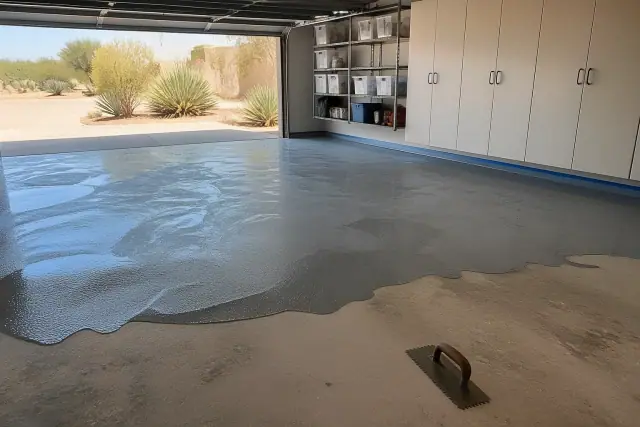
Epoxy coating applied to a residential garage floor in Queen Creek, AZ, with a notched trowel on the surface.

Two-component, high-solids epoxy is applied over concrete ground to an ICRI CSP 3 profile, with cracks and control joints repaired first. The resulting base coat is selected for daily vehicle traffic, oil drips, thermal cycling, and hot-tire pickup resistance. Explore Service

Explore Service
Garage Floor Coatings

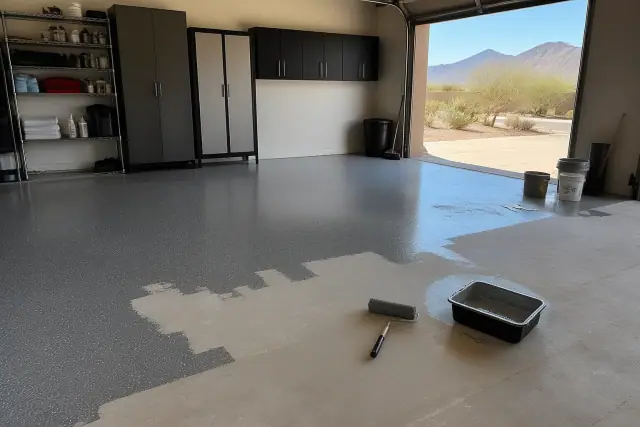
Epoxy garage floor coating in progress at a residential home in Queen Creek, AZ.

A garage coating can combine epoxy base layers with a polyaspartic or polyurethane topcoat to balance adhesion, abrasion resistance, chemical resistance, and UV stability. The build is matched to the floor's existing condition and how the garage is used. Explore Service

Explore Service
Polyaspartic Floor Coatings

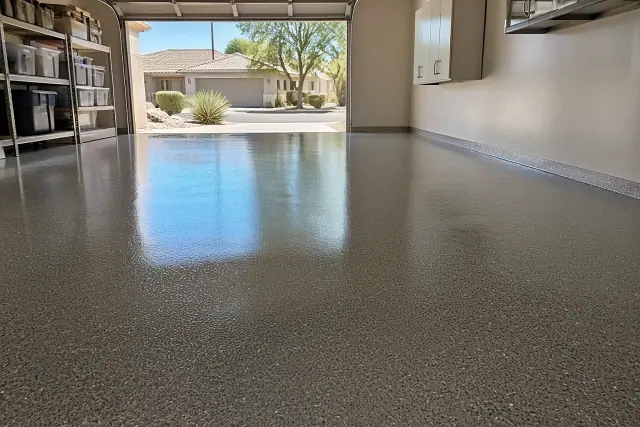
Polyaspartic floor coating with flake texture in a residential garage in Queen Creek, AZ.

Polyaspartic and polyurea materials cure in hours instead of days and resist UV yellowing better than standard epoxy. They can serve as standalone coatings or protective topcoats over epoxy where faster cure, abrasion resistance, and chemical resistance matter. Explore Service

Explore Service
Epoxy Flake Flooring

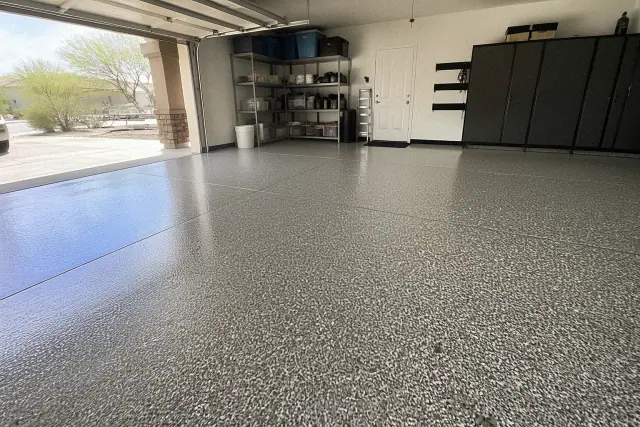
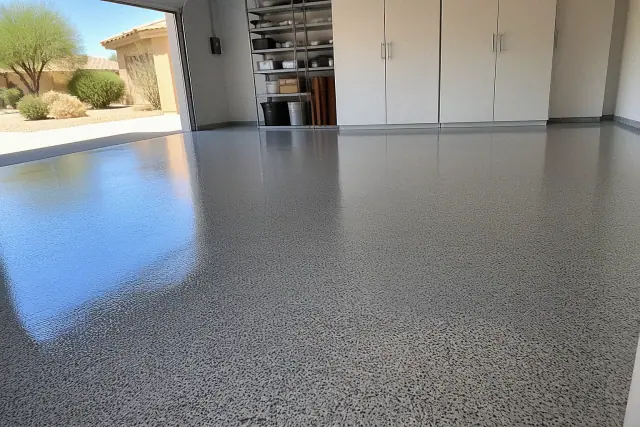
Epoxy flake flooring in a residential garage with desert landscaping visible outside in Queen Creek, AZ.

Colored vinyl chips are broadcast into a wet epoxy base and sealed beneath a clear polyaspartic or polyurethane topcoat. Flake adds slip resistance and helps disguise minor substrate imperfections in garages, patios, and commercial entryways exposed to foot traffic or monsoon moisture.

Metallic Epoxy Flooring

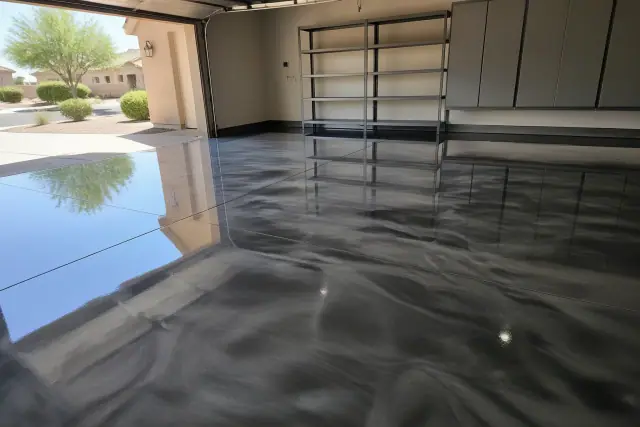
Metallic epoxy garage flooring with high-gloss swirls in a residential home in Queen Creek, AZ.

Mica and pearlescent pigments are manipulated in clear or tinted resin to form marbled, three-dimensional movement. Because the pigment flow cannot be replicated exactly, each metallic floor creates a distinct finish for showroom garages, game rooms, and custom homes.

Commercial Epoxy Flooring

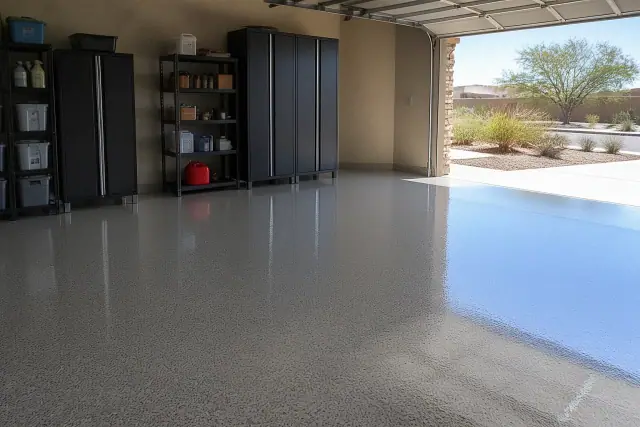
High-gloss epoxy floor in a residential garage in Queen Creek, AZ, with storage cabinets and desert views.

Commercial epoxy and polyaspartic systems are specified for retail buildouts, showrooms, offices, and other floors facing daily foot traffic, forklift traffic, or chemical spills, including properties near the Ellsworth Road business corridor. Work can be scheduled overnight or over a weekend to reduce disruption for Queen Creek businesses.

Industrial Epoxy Flooring

Glossy industrial epoxy flooring in a residential garage in Queen Creek, AZ, with storage cabinets and visible desert

Warehouses, manufacturing floors, and distribution centers may require higher-build systems with more chemical and impact resistance than standard commercial coatings. Specifications can include heavier mil thicknesses and secondary-containment coatings where facilities handle fuel, solvents, or manufacturing byproducts.

Residential Epoxy Flooring

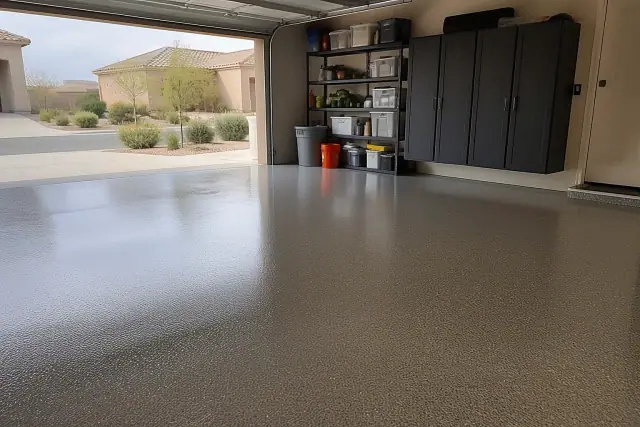
Freshly applied epoxy flooring in a residential garage in Queen Creek, AZ, with desert landscaping visible outside.

Residential systems can cover garages, patios, sunrooms, and basements without a basement moisture concern. Flake, metallic, or solid-color finishes are selected around day-to-day use, desired appearance, sun exposure, and cleaning needs.

Concrete Polishing

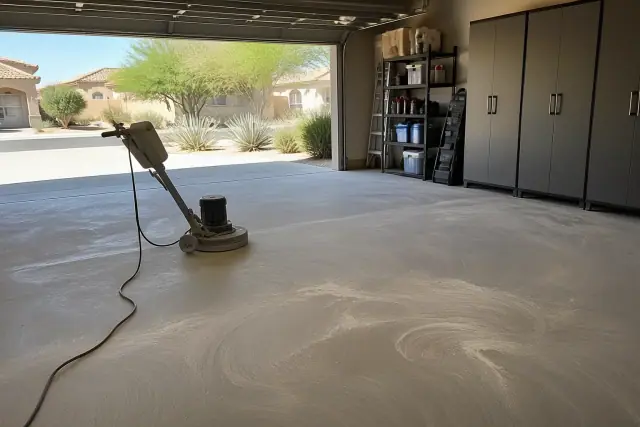
Concrete floor mid-polish inside a residential garage in Queen Creek, AZ with desert landscaping visible outside.

Multi-step diamond grinding exposes and refines the aggregate to a satin or high-gloss sheen without a topical coating. Polished concrete provides a low-maintenance, coating-free finish that resists staining and dusting in commercial lobbies, warehouses, and homes.

Concrete Staining & Grind and Seal

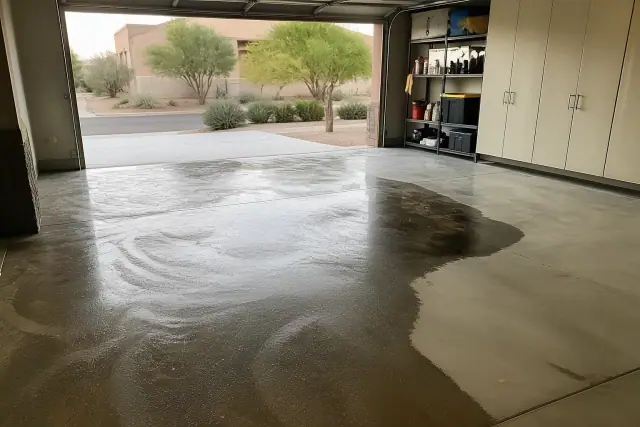
Concrete floor grinding and staining in a residential garage in Queen Creek, AZ.

Acid-based or water-based stains penetrate concrete for translucent, variegated color on patios, walkways, and interior floors. Grind and seal pairs mechanical preparation with a penetrating or film-forming sealer when dust control and basic stain resistance matter more than a full epoxy build-up.

System Selection

How to Choose the Right Floor Finish in Queen Creek

The right floor is not determined by appearance alone. Compare the space's traffic, sun and moisture exposure, slab condition, desired texture, available cure window, and long-term performance goals before selecting epoxy, polyaspartic, flake, metallic, polished, stained, or grind-and-seal work.

Traffic and Intended Use

A home garage, patio, showroom, warehouse, and manufacturing floor place different demands on concrete. Vehicle loads, forklift movement, oil drips, chemicals, foot traffic, and whether the room doubles as a gym or workshop all shape the recommended build.

UV Exposure

Standard epoxy can amber or chalk in direct sunlight near open garage doors, patios, and south-facing driveway aprons. A polyaspartic or polyurethane topcoat is often the better match when UV stability is central to the project.

Slab Moisture

Moisture readings and surface porosity should be checked before a system is chosen. When vapor readings warrant it, a moisture-mitigating primer helps address conditions that could otherwise produce bubbles or weaken adhesion.

Surface Condition

Hairline cracks, spalls, control joints, old sealers, oil, and failed paint all change the preparation required. Concrete installed in the 1990s or early 2000s may need aggressive grinding after years of contamination, while newer construction poured within the last few years still needs adequate cure time and moisture testing.

Finish and Texture

Flake can improve slip resistance and disguise small imperfections, metallic pigment creates one-of-a-kind movement, and polished or stained concrete reveals the slab's natural character. The desired sheen, color variation, and cleanup needs narrow the choice.

Budget, Cure Time, and Longevity

Grind and seal offers a budget-friendly route to dust control and basic stain resistance, while higher-build epoxy and polyaspartic systems target longer service under heavier use. Compare initial preparation, decorative options, the time the space can remain out of service, and expected maintenance together.

Queen Creek Floor Issues

Common Coating Problems on Queen Creek Concrete

Desert heat, caliche-heavy soil, seasonal moisture, direct sun, and contamination can expose weak preparation or the wrong coating chemistry. Identifying the cause before installation helps determine whether the slab needs crack repair, more aggressive profiling, moisture mitigation, or a UV-stable topcoat.

Request Floor Evaluation

Hot-Tire Pickup and Peeling

Queen Creek slab surfaces routinely exceed 140 degrees as ambient highs push past 115. Warm tires can lift inferior paint or thin coatings, while a properly prepared, high-solids system is selected to resist that pickup and repeated thermal cycling.

Cracks from Expansive Soils

Concrete poured over caliche-heavy, expansive desert soil can develop hairline cracks as the ground shifts seasonally. Cracks, spalls, and control joints should be evaluated and filled with epoxy or polyurea repair material before the coating build begins.

Moisture and Vapor Emissions

Monsoon season typically runs from July through September, sending sudden moisture through garage thresholds and driveway aprons. Vapor emissions beneath an untested floor can contribute to bubbles or adhesion trouble, so readings should guide whether a moisture-mitigating primer is used.

UV Yellowing and Chalking

Direct Arizona sun can amber and chalk standard epoxy near an open garage door or on an outdoor patio. Polyaspartic and polyurethane topcoats provide better UV stability for exposed surfaces, including south-facing driveway aprons.

Oil and Chemical Contamination

Older slabs near Queen Creek's original town center may hold oil, transmission fluid, old sealers, and residue from years of vehicle use. Testing surface porosity and mechanically removing contamination is essential before a new resin system can bond reliably.

Dusting and Surface Pitting

Unsealed concrete can pit and release dust while absorbing fertilizer residue, battery leaks, oil, road salt tracked home from winter trips north, and fine reddish dust from surrounding desert lots. A matched coating, polished finish, or grind-and-seal treatment can improve cleanability and control surface dust.

Why Choose Us

Why Choose Phoenix Epoxy Co. in Queen Creek?

Phoenix Epoxy Co. is a licensed and insured, veteran-owned local epoxy contractor familiar with slab conditions across the San Tan corridor and the Maricopa and Pinal County sides of Queen Creek. Projects follow standards set by the Arizona Registrar of Contractors and surface-preparation guidance from the International Concrete Repair Institute, with a written scope identifying the selected system, preparation method, and estimated timeline.

Local Slab Expertise

Crews account for Queen Creek's heat, caliche-heavy soils, monsoon moisture, and differences between newer slabs in Ironwood Crossing or Meridian and older properties near the town center. That local context informs testing, repair, and coating selection.

Written Coating Plan

Every job begins with a written scope describing the coating system, preparation method, and estimated timeline. Two-component epoxy and polyaspartic products are sourced from manufacturers whose products meet ASTM testing standards for abrasion, chemical, and UV resistance.

Direct Installation Accountability

The local team that evaluates the slab remains accountable for the installation instead of handing it to an out-of-state subcontracted crew. If bubbling or an adhesion concern appears during curing, the crew returns to address the issue directly.

Installation Process

Our Epoxy Flooring Installation Process in Queen Creek

A durable floor depends on the condition of the slab, the profile created during preparation, and the chemistry installed above it. The process moves from testing and repairs through primer, base coat, decorative broadcast when selected, topcoat, and a cure window appropriate to the finished system.

01.

On-Site Slab Evaluation

Inspect cracks, spalls, control joints, old coatings, contamination, surface porosity, and intended traffic. A calcium chloride or relative-humidity moisture test performed per ASTM F2170 standards helps identify vapor conditions before materials are specified.

02.

Mechanical Surface Profiling

Diamond grinding or shot blasting opens the concrete and removes weak surface material. The required coating determines an ICRI CSP 2-4 profile, creating the mechanical texture needed for the next layer to bond.

03.

Crack and Joint Repair

Cracks, spalls, and control joints are repaired with epoxy or polyurea fillers after profiling exposes their true condition. This creates a more consistent substrate before primer or resin is applied.

04.

Primer and Epoxy Base Coat

A moisture-mitigating primer is applied where vapor readings warrant it, followed by a high-solids two-component epoxy base coat. Product selection reflects the measured slab condition and the traffic, chemical, and temperature demands of the space.

05.

Decorative Broadcast and Topcoat

Flake, quartz, or metallic pigment is added when the selected system calls for it. A polyaspartic or polyurethane topcoat then supplies the required UV stability, abrasion resistance, and chemical resistance.

06.

Cure and Return to Service

Most single-car garages are ready for foot traffic within 24 hours and vehicle traffic within 3 to 5 days, depending on the topcoat. Polyaspartic-heavy systems can shorten that window because their chemistry cures faster than standard epoxy.

Practical Outcomes

Flooring Outcomes for Queen Creek Homes & Businesses

Case Study 1: Garages and workshops: A nonporous epoxy or polyaspartic build makes oil, battery residue, and fine desert dust easier to clean while supporting daily vehicle or hobby use.

Case Study 2: Patios and living spaces: Flake improves texture, metallic resin adds dramatic movement, and stained or polished concrete keeps more of the slab's natural character visible.

Case Study 3: Commercial and industrial floors: Higher-build systems can be matched to foot traffic, forklifts, abrasion, impact, or chemical exposure while scheduling helps limit operational downtime.

Plan Your Floor

Schedule a Queen Creek
Floor Coating
Evaluation

Request a free on-site evaluation to review slab condition, moisture, intended use, finish options, and the preparation your floor requires. Phoenix Epoxy Co. will outline the recommended system and estimated timeline before installation begins.

Local Flooring Help

FAQs About Epoxy Flooring in Queen Creek, AZ

Use these answers to compare coating costs, service life, preparation, cure windows, finishes, and the Queen Creek slab conditions that affect a project. A site evaluation is still needed to match a system to a specific floor.

Call Our Experts

Professionally installed two-component epoxy and polyaspartic systems run roughly $3 to $12 per square foot, depending on the system, required preparation, and decorative flake or metallic pigment. An on-site evaluation is needed to assess cracks, contamination, moisture, and the desired build.

Quality two-component epoxy and polyaspartic systems can last 15 to 20 years with normal residential use. Thin DIY kits commonly last 3 to 5 years, while single-component water-based kits may last only 1 to 3 years in a hot climate before peeling or yellowing.

Most single-car garage floors are ready for foot traffic within 24 hours and full vehicle traffic within 3 to 5 days, depending on the topcoat. Polyaspartic-heavy systems can reduce the cure window because they cure faster than standard epoxy.

Diamond grinding or shot blasting removes weak material and opens the concrete so resin can bond mechanically. The required system determines an ICRI CSP 2-4 profile; the core garage epoxy process commonly targets ICRI CSP 3.

Yes. The evaluation can use a calcium chloride or relative-humidity moisture test per ASTM F2170 standards, along with a check of surface porosity. Where vapor readings warrant it, the coating plan includes a moisture-mitigating primer.

Epoxy supplies a high-solids base with strong adhesion over a properly profiled slab. Polyaspartic and polyurea products cure in hours rather than days and resist UV yellowing better, so they can be used alone or as a protective topcoat over epoxy.

A professionally prepared, high-solids epoxy system can be selected for hot-tire pickup resistance. Mechanical profiling and product quality matter because warm tires can lift paint-based or thin retail coatings in Queen Creek heat.

Colored vinyl chips add texture and slip resistance while helping hide minor imperfections in the concrete. They are broadcast into wet epoxy and sealed beneath a clear polyaspartic or polyurethane topcoat.

Yes. Mica and pearlescent pigments move through clear or tinted resin as installers manipulate them with brushes and forced air, and that movement cannot be duplicated exactly. The result is a marbled, three-dimensional finish often chosen for showroom garages, game rooms, and custom homes.

Standard epoxy can amber or chalk under direct UV exposure, especially near an open garage door or on a patio. Polyaspartic or polyurethane topcoats offer better UV stability, while stained concrete is another option when a penetrating decorative finish suits the space.

Concrete polishing uses multi-step diamond grinding to refine the slab and expose aggregate without applying a topical coating. It can produce a satin or high-gloss, low-maintenance finish that resists staining and dusting.

Grind and seal is useful when the priority is dust control and basic stain resistance instead of heavy chemical or abrasion resistance. It combines mechanical preparation with a penetrating or film-forming sealer and is a budget-friendly alternative to a full epoxy build-up.

Not always. Commercial systems may be matched to retail traffic, showrooms, offices, forklifts, and routine spills, while industrial floors can require higher-build materials, heavier mil thicknesses, more impact resistance, or secondary containment for fuels and solvents.

Slab temperatures routinely exceed 140 degrees as ambient highs push past 115, and caliche-heavy soil can contribute to seasonal cracking. Monsoon moisture typically arrives from July through September, while direct UV exposure can amber or chalk standard epoxy.

Industry data cited for professionally installed coatings estimates a 500 to 1,100 percent return on investment relative to material and labor cost. Actual value depends on the property's condition, the system selected, and how buyers value a clean, durable garage or finished concrete space.