Proudly serving Phoenix, Scottsdale, Mesa, Chandler, Gilbert, Tempe & surrounding areasCall or Text 24/7: 480-264-9663
Aerial view of a residential neighborhood with saguaros and desert foothills in Phoenix, AZ.

Concrete Polishing and Grind-and-Seal Services in Phoenix, AZ

Phoenix Epoxy Co. provides concrete polishing, concrete staining, grind and seal finishes, and garage floor epoxy in Phoenix, Arizona. The company also installs polyaspartic, epoxy flake, metallic epoxy, and commercial and industrial epoxy flooring. These services cover garages, warehouses, retail floors, showrooms, manufacturing spaces, and modern homes across the surrounding metro.

Phoenix slabs face 110-plus degree summers, monsoon humidity swings, and movement tied to caliche-heavy soil. Those conditions can leave bare or poorly sealed concrete cracked, dusty, and stained. Crews use multi-step metal-bond and resin-bond diamond tooling to establish a Concrete Surface Profile that matches ICRI guidelines before densifiers, stains, or coatings are applied. Grinding dust control follows OSHA's respirable crystalline silica standard, an important consideration in Maricopa County's PM10 nonattainment area.

The 5.19 million-resident metro includes century-old downtown buildings, original 1950s slabs, and newly poured construction toward the Sun Corridor. Each floor is evaluated so the finish can respect the slab's condition, color, aggregate, and visible cracks.

Phoenix Epoxy Co. provides concrete polishing throughout Phoenix and the surrounding metro, including Scottsdale, Tempe, Mesa, Chandler, and Glendale.

★ ★ ★ ★ ★4.9/5 Average Rating · 20+ Years of Experience · Thousands of Customers Helped · Licensed & Insured · Residential & Commercial

Concrete Polishing Options & Benefits

What Is Concrete Polishing?

Concrete polishing is a mechanical grinding process, not a coating. Progressively finer diamond abrasives cut and refine the existing slab before a lithium-silicate hardener densifies the surface.

Because the finished floor is the concrete itself, it does not have a film that can peel or require a coating reapplication cycle. The slab's natural color, aggregate pattern, and existing cracks remain part of the finished appearance.

Grinding can preserve a cream finish or continue to expose more aggregate, depending on the design and slab condition. Resin-bond honing and final burnishing then establish a consistent matte, satin, or high-gloss reflection.

Benefits of Concrete Polishing

A polished slab combines a durable traffic surface with straightforward care and an intentional, stone-like appearance. The finish can serve residential, retail, showroom, warehouse, and manufacturing environments without covering the existing concrete.

  • Resists heavy foot and equipment traffic once densified
  • Can last 20 years or more with proper maintenance
  • Avoids the 7 to 10-year replacement cycle common to tile or carpet in high-traffic commercial spaces
  • Needs routine dust mopping and occasional pH-neutral cleaning
  • Eliminates wax stripping and dirt-catching grout lines
  • Reflects ambient and overhead light across large floor areas
  • Stops the loose dust generation associated with raw concrete
  • Refines the existing slab without adding a peel-prone surface film
Concrete Floor Services

Concrete Polishing & Floor Services

The right floor treatment depends on whether the goal is to refine the slab itself, add color, seal a budget-conscious commercial floor, or install a protective decorative coating. Phoenix Epoxy Co. evaluates the substrate and intended use before recommending one of these supported options.

Concrete Polishing

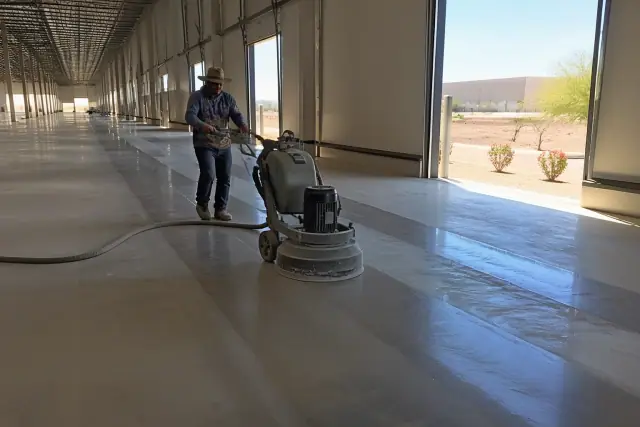
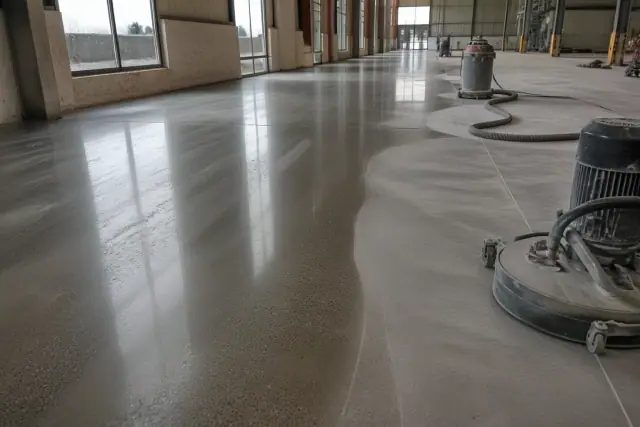
A heavy-duty grinder polishing the concrete floor inside a Phoenix, AZ industrial warehouse.

Progressively finer metal-bond and resin-bond diamonds refine the slab before lithium-silicate densification and burnishing. Gloss is typically specified at levels 1 through 3, from matte to high gloss.

Request Estimate

Concrete Staining

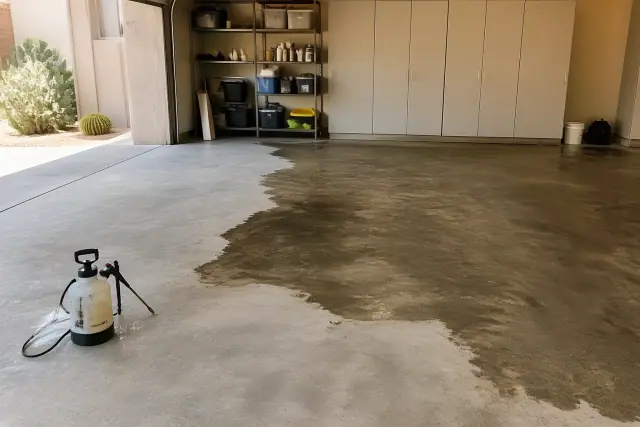
Concrete staining in progress on a residential garage floor in Phoenix, AZ, with a handheld sprayer nearby.

Concrete staining introduces color after the slab has been ground to an appropriate surface profile. A penetrating sealer or guard then helps resist stains without hiding the concrete's underlying character.

Request Estimate

Grind and Seal

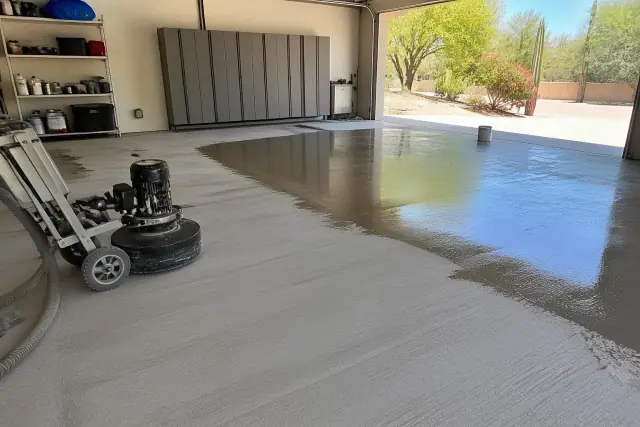
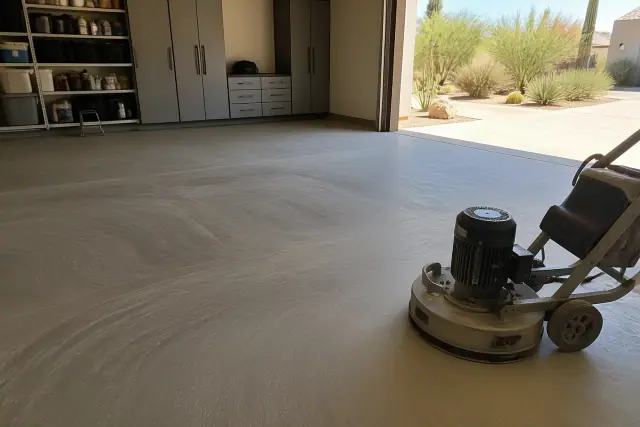
Concrete floor grinding and sealing in a residential garage in Phoenix, AZ.

Grind and seal provides a low-sheen option for budget-conscious commercial floors and warehouses. Typical pricing ranges from $2-$4 per square foot, with final cost influenced by slab condition.

Request Estimate

Garage Floor Epoxy

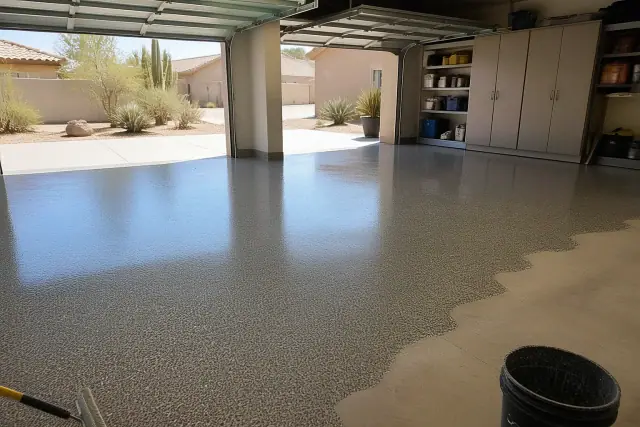
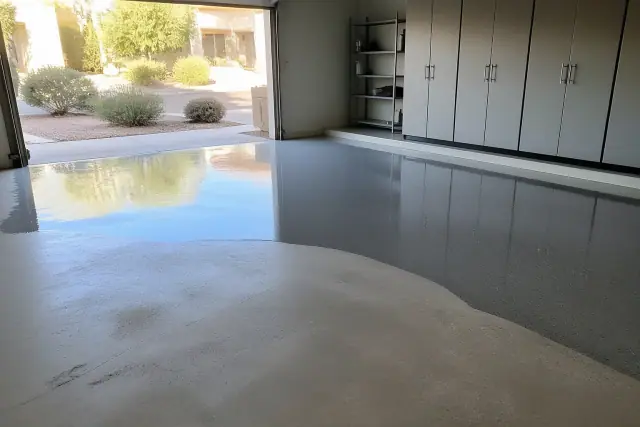
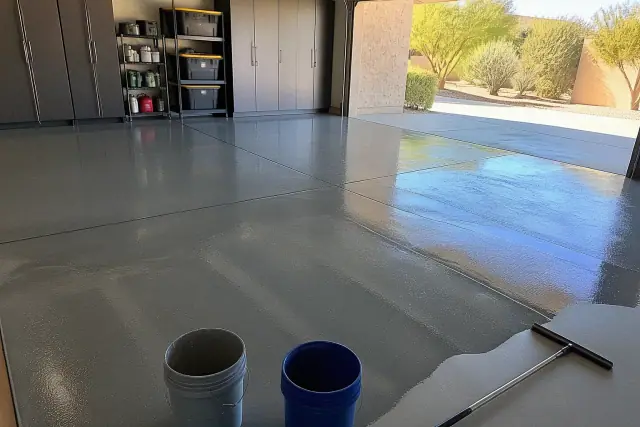
Partially applied epoxy coating on a residential garage floor in Phoenix, AZ.

Garage and industrial floors can receive a 100% solids two-part epoxy system over properly prepared concrete. Typical pricing ranges from $4-$9 per square foot for a high-gloss film finish.

Request Estimate

Polyaspartic Floor Coatings

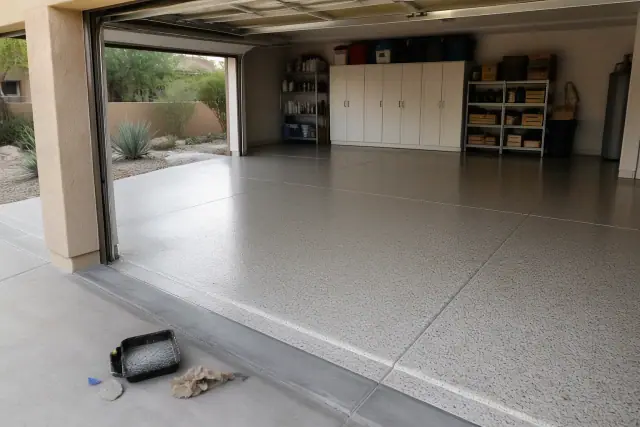
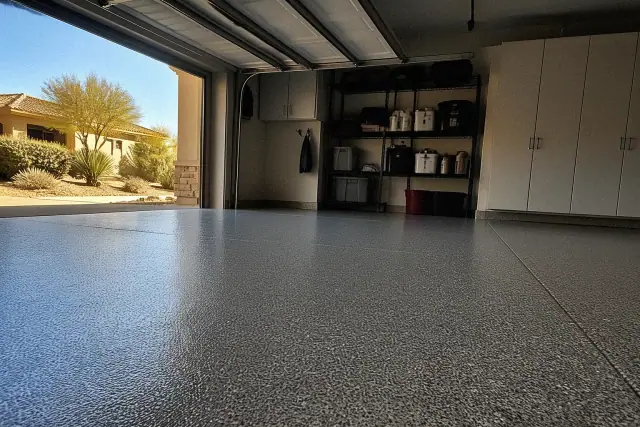
Completed polyaspartic flake floor coating in a residential garage in Phoenix, AZ with clean control joints.

Fast-curing polyaspartic topcoats suit floors exposed to Phoenix heat and direct UV. The formulation avoids the amine blush and yellowing that can affect standard epoxy in sun-exposed areas.

Request Estimate

Decorative & Industrial Epoxy Flooring

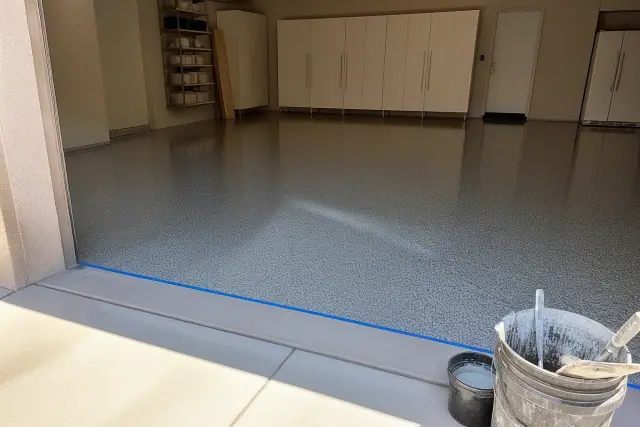
High-gloss flake epoxy floor in a residential garage in Phoenix, AZ, with mixing tools and masking tape.

Epoxy flake and metallic epoxy offer decorative options, while commercial and industrial epoxy serves warehouses, retail floors, and manufacturing spaces. Each system begins with grinding and a surface profile suited to the planned coating.

Request Estimate
Concrete Floor Options

Types of Concrete Floor Finishes

Polished concrete, epoxy, grind and seal, polyaspartic, and decorative epoxy each interact with the slab differently. Compare whether the finish becomes part of the concrete or sits above it, the desired sheen, the expected traffic, and exposure to Phoenix sun before choosing an approach.

Polished concrete floor in an industrial warehouse under construction in Phoenix, AZ.

Polished Concrete

Polishing mechanically refines and chemically densifies the existing slab rather than covering it. The finished surface can resemble polished stone while preserving the concrete's individual character.

  • Matte, satin, or high-gloss appearance
  • Suited to showrooms, retail floors, and modern homes
  • No separate surface film or coating cycle
  • Cream finish through full aggregate exposure
  • Existing color, aggregate, and cracks remain visible
Request Estimate
Fresh epoxy coating being applied to a residential garage floor in Phoenix, AZ.

Epoxy Coating

Epoxy forms a protective film above a prepared slab instead of becoming part of the concrete. This option is positioned for garage and industrial floors that call for a high-gloss coating surface.

  • Two-part solids-based coating system
  • High-gloss film finish
  • Garage floor applications
  • Industrial floor applications
  • Diamond-ground surface profile before application
Request Estimate
Grind and seal concrete floor project in a residential garage in Phoenix, AZ.

Grind and Seal

Grind and seal pairs mechanical preparation with a sealed, low-sheen finish. It provides a practical option for commercial spaces and warehouses where budget and serviceability take priority over a deep polish.

  • Low-sheen finished appearance
  • Budget-conscious commercial option
  • Appropriate for warehouse floors
  • Uses the existing concrete slab
  • Preparation adjusted to slab condition
Request Estimate
Polyaspartic floor coating application on a garage floor in Phoenix, AZ, with mixing buckets and open garage door view.

Polyaspartic Floor Coating

Polyaspartic works as a fast-curing topcoat where heat and direct sun exposure are central concerns. Its UV behavior makes it a useful alternative to standard epoxy for exposed Phoenix floors.

  • Fast-curing topcoat formulation
  • Designed to hold up in Phoenix heat
  • Better suited to direct UV exposure
  • Avoids standard epoxy amine blush
  • Resists the yellowing associated with sun-exposed standard epoxy
Request Estimate
Decorative epoxy flooring in a residential garage in Phoenix, AZ.

Decorative Epoxy Flooring

Decorative epoxy uses flake or metallic treatments to give a coated floor a more expressive finish. Related commercial and industrial systems extend epoxy flooring into retail, warehouse, and manufacturing environments.

  • Epoxy flake flooring
  • Metallic epoxy flooring
  • Retail floor applications
  • Warehouse floor applications
  • Manufacturing floor applications
Request Estimate
Finding Your Right Fit

Choosing the Right Concrete Floor Approach

Start with the slab, not just the desired color or shine. Existing coatings, cracks, joint condition, moisture, aggregate exposure, traffic, and direct sun all affect whether polishing, grind and seal, epoxy, or polyaspartic is the better fit.

Diamond Tooling & Surface Profiles

Multi-step metal-bond and resin-bond diamond tooling is selected to create the Concrete Surface Profile required for the planned densifier, stain, or coating. The preparation approach follows ICRI guidelines instead of treating every slab the same.

Arizona-Licensed Work

All work is performed under Arizona Registrar of Contractors licensing. The licensed work described here includes residential, commercial, and industrial concrete floors.

Silica-Conscious Dust Control

Grinding procedures follow OSHA's respirable crystalline silica standard for dust control. That discipline matters for an abrasive process in Maricopa County, which is classified as a PM10 nonattainment area.

What Sets Our Process Apart

Why Choose Us for Concrete Polishing in Phoenix?

Phoenix concrete ranges from original mid-century residential slabs to newly poured commercial floors, and each surface responds differently to grinding. Phoenix Epoxy Co. evaluates moisture, cracks, joints, coatings, and the desired aggregate exposure before defining the tooling sequence and finish.

Request a Floor Assessment

Concrete Dusting

Raw concrete can shed fine dust into garages, warehouses, and retail spaces. Mechanical polishing and lithium-silicate densification harden the surface and stop the dust generation associated with an unfinished slab.

Stains and Spills

Bare or poorly sealed concrete can absorb spills and develop visible staining. After polishing, a penetrating sealer or guard adds stain resistance without creating a visible film above the slab.

Cracks and Slab Movement

Monsoon humidity swings and caliche-heavy soil can contribute to movement beneath Phoenix foundations. Polishing refines the concrete but does not conceal existing cracks, so they are evaluated as part of the floor's final appearance.

Peeling or Yellowed Coatings

A polished floor has no coating film to peel, while direct UV can cause amine blush or yellowing in standard epoxy. For a coated floor exposed to Phoenix sun, a polyaspartic topcoat offers an alternative suited to those conditions.

Uneven Gloss or Aggregate Exposure

The metal-bond and resin-bond diamond sequence controls how much aggregate is exposed and how the finished surface reflects light. A properly finished floor should show a consistent reflection across the slab rather than patchy bands of sheen.

Moisture in Older Slabs

Older Phoenix slabs may predate modern vapor barriers and require moisture review before polishing begins. When conditions call for it, moisture vapor testing is performed in line with ASTM F2170 before committing to the finish.

How It Works

Our Concrete Polishing Process

Concrete polishing progresses from slab evaluation through controlled grinding, chemical densification, fine honing, and final protection. Each stage builds on the previous one, so the planned gloss and aggregate exposure are established before the first diamond pass.

01.

Inspect the Slab and Define the Finish

The assessment documents existing coatings, cracks, joint condition, moisture indicators, and the intended floor use. The desired cream-to-full-aggregate exposure and final sheen are also defined at this stage.

02.

Review Moisture and Existing Coatings

Older slabs receive added scrutiny where modern vapor barriers may be absent. ASTM F2170 moisture vapor testing can be used before the team commits to polishing, and existing coatings are accounted for in the preparation plan.

03.

Begin Metal-Bond Diamond Grinding

Grinding commonly starts around 30/40 grit and advances through finer metal bonds. These passes open the surface and expose aggregate only to the level selected for the design.

04.

Refine and Densify the Surface

After the slab reaches its planned profile, a lithium-silicate densifier reacts with free lime in the concrete. The reaction hardens the upper surface in preparation for finer honing and daily traffic.

05.

Hone with Resin-Bond Diamonds

The finishing sequence moves to resin-bond diamonds, often in the 800 to 3,000 grit range. These finer passes build the specified sheen and bring the surface toward a consistent reflection.

06.

Protect and Final-Burnish the Floor

A penetrating sealer or guard is applied to resist staining without leaving a visible coating film. Final burnishing evens the reflection and completes the selected matte-to-high-gloss finish.

Start with Your Slab

Schedule a Concrete Polishing
Consultation

Discuss the slab's current condition, intended traffic, desired aggregate exposure, and preferred sheen with Phoenix Epoxy Co. The consultation can clarify whether polishing or another supported concrete floor finish better matches the space.

Concrete Polishing Help

Concrete Polishing FAQs

These answers cover concrete polishing costs, finish levels, maintenance, moisture review, and comparisons with coated floor systems. For a recommendation tied to a specific slab, discuss its condition and intended use with Phoenix Epoxy Co.

Call About Your Floor

Concrete polishing typically costs $3-$8 per square foot. Slab condition and the amount of aggregate exposure influence where a project falls within that range.

A properly maintained polished floor commonly lasts 20 years or more without needing a full refinish. Traffic, slab condition, and maintenance practices still affect long-term appearance.

Routine dust mopping and occasional cleaning with a pH-neutral product are usually sufficient. Polished concrete has no grout lines to collect dirt and does not require wax stripping.

No. Polishing mechanically refines and chemically densifies the existing slab, while epoxy and polyaspartic systems form a film above the concrete.

Concrete polishing is typically specified at levels 1 through 3 on the industry's matte-to-high-gloss scale. Resin-bond honing and burnishing build the selected sheen.

Yes, the grinding plan can target an exposure ranging from a cream finish to full aggregate. The slab itself also influences the final pattern, so existing concrete character remains visible.

Older slabs can be candidates for polishing after their coatings, cracks, joints, and moisture conditions are evaluated. Slabs that predate modern vapor barriers may call for ASTM F2170 moisture vapor testing before the finish is selected.

No. The process refines the slab but leaves its existing color, aggregate, and cracks visible, so those features should be considered part of the finished look.

Polished concrete is the mechanically refined slab itself, so there is no coating film to peel or reapply. Epoxy creates a high-gloss film above the surface and is positioned for garage and industrial floors.

Polished concrete uses a longer mechanical refinement and densification sequence to create a matte-to-high-gloss surface. Grind and seal is presented as a lower-sheen, budget-conscious option for commercial floors and warehouses.

Polished concrete has no coating film to yellow. When a coated finish is preferred, fast-curing polyaspartic topcoats hold up to Phoenix heat without the amine blush or yellowing that can affect standard epoxy in direct UV exposure.

Yes. Grinding, lithium-silicate densification, and final honing eliminate the dust generation associated with raw concrete, which is useful in garages, warehouses, and other occupied spaces.

Service covers Phoenix and the surrounding metro, including Scottsdale, Tempe, Mesa, Chandler, and Glendale. Concrete polishing is offered for homes, garages, showrooms, retail floors, warehouses, and manufacturing spaces.