Proudly serving Phoenix, Scottsdale, Mesa, Chandler, Gilbert, Tempe & surrounding areasCall or Text 24/7: 480-264-9663
Aerial view of a residential neighborhood with saguaros and desert foothills in Phoenix, AZ.

Garage Floor Epoxy and High-End Concrete Coating Systems in Paradise Valley, AZ

Phoenix Epoxy Co. installs garage floor epoxy, polyaspartic coatings, flake and metallic finishes, concrete polishing, concrete staining, and grind-and-seal floors throughout Paradise Valley, Arizona. We serve custom estate homes, resort properties, and commercial spaces across neighborhoods including Camelback Corridor, Mummy Mountain, Clearwater Hills, and Cheney Estates. Every recommendation starts with how the slab is used, its exposure, and the finish the property calls for.

Paradise Valley garage slabs face summer surface temperatures that regularly exceed 140 degrees, sudden monsoon humidity, wind-driven dust, and movement over caliche and expansive clay soils. Those conditions can cause bare concrete to crack, pit, absorb oil, and wear quickly. They can also expose weak coating preparation through hot tire pickup, moisture bubbles, or UV discoloration. We assess the slab before quoting so the coating and preparation plan fit the property.

Our crews are familiar with the town's building safety review process and use moisture testing, mechanical diamond grinding, crack repair, and traffic-appropriate topcoats to build a durable finish.

★ ★ ★ ★ ★4.9/5 Average Rating - 20+ Years of Experience - Paradise Valley Epoxy Flooring Contractor Specialists - Residential & Commercial
Flooring Services

Garage Floor Epoxy Services in Paradise Valley, AZ

Compare each system by slab condition, sun exposure, traffic, decorative goals, and return-to-service needs. Phoenix Epoxy Co. installs the ten floor options below in Paradise Valley and helps match the build to the property and budget. If you are comparing service information across the Valley, you can also review our Goodyear, AZ location page.

Garage Floor Epoxy

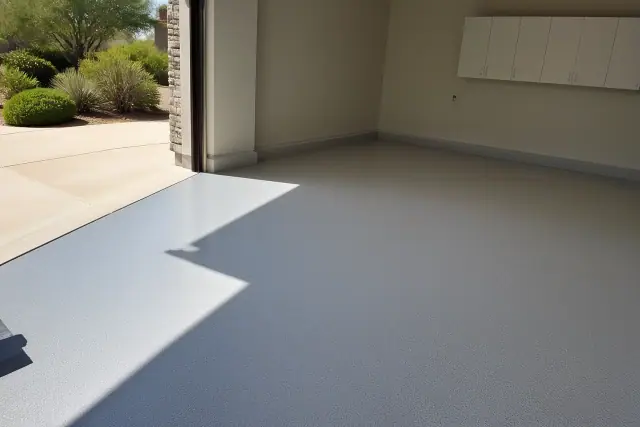
Freshly applied garage floor epoxy with visible texture inside a residential garage in Paradise Valley, AZ.

A two-part epoxy resin system bonds directly to properly profiled concrete and resists oil, tire residue, and hot tire pickup. We use commercial-grade epoxy solids rather than thinned retail kits for a stronger garage-floor build.

Explore Service

Garage Floor Coatings

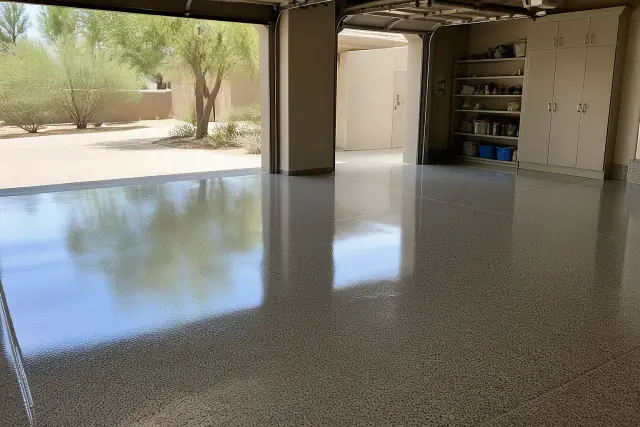
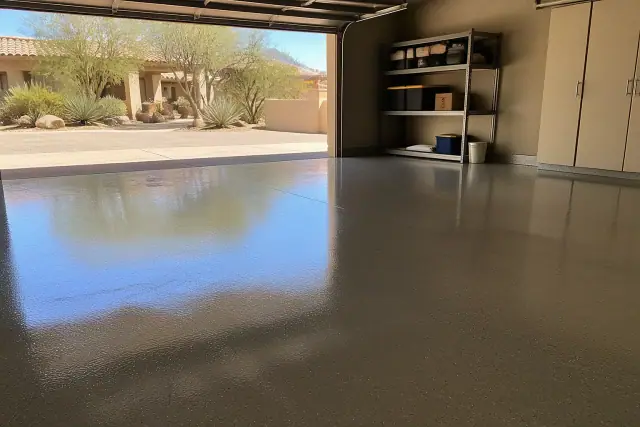
High-gloss epoxy garage floor coating in a residential garage in Paradise Valley, AZ.

Garage floor coatings are selected around the slab, traffic, moisture exposure, appearance, and available cure window. Options range from solid epoxy and flake floors to faster-curing polyaspartic systems.

Explore Service

Polyaspartic Floor Coatings

Polyaspartic floor coating applied to a residential garage floor in Paradise Valley, AZ with storage cabinets.

Polyaspartic coatings cure faster than traditional epoxy and hold up better under direct UV exposure. They are a practical choice for garages that receive afternoon sun or cannot stay out of service for a full epoxy cure window.

Explore Service

Epoxy Flake Flooring

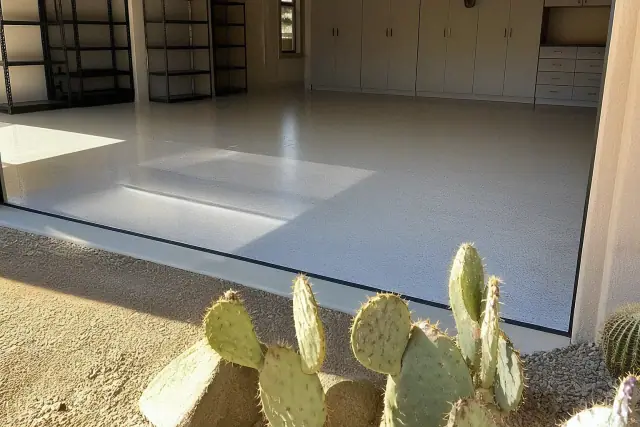
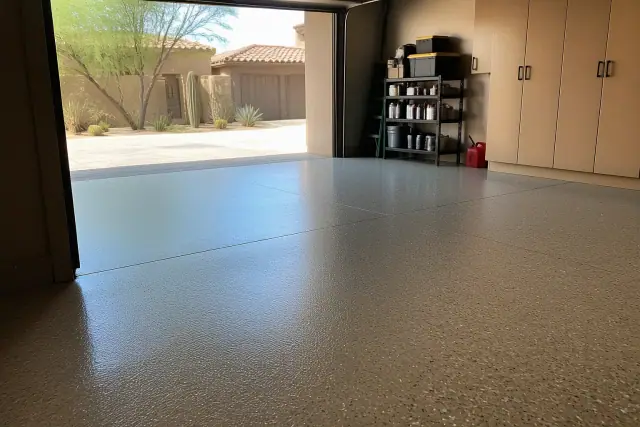
Epoxy flake floor in a residential garage with desert xeriscaping visible in Paradise Valley, AZ.

Colored vinyl chips are broadcast into a wet epoxy base and sealed beneath a clear epoxy or polyaspartic topcoat. The textured finish adds slip resistance around wet tires and pool equipment rooms while helping disguise minor slab imperfections.

Metallic Epoxy Flooring

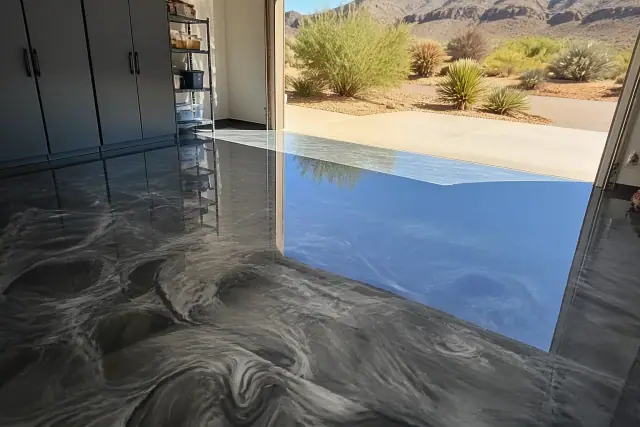
Metallic epoxy flooring with fluid swirls in a residential garage in Paradise Valley, AZ, viewed in bright sunlight.

Metallic pigments suspended in clear epoxy create a three-dimensional, marbled appearance that varies with every pour. This custom finish suits showcase garages, wine rooms, casitas, and spaces used to display a car collection.

Commercial Epoxy Flooring

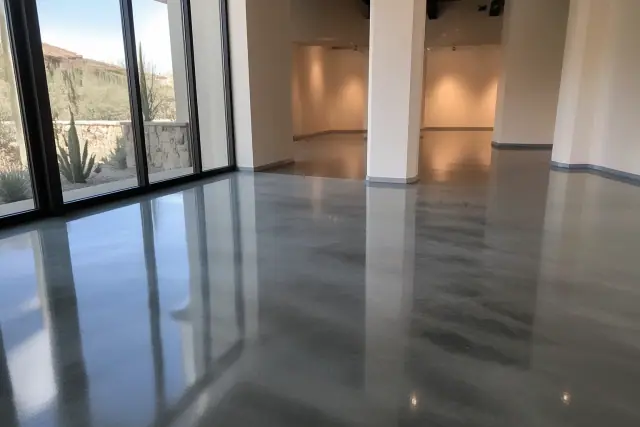
Polished epoxy floor in an empty retail space in Paradise Valley, AZ, showing glossy reflections and nearby desert views.

Commercial epoxy systems are formulated for resort, golf club, restaurant, lobby, kitchen, and retail conditions. They resist daily foot traffic, spills, and frequent cleaning, and installation can be phased around off-hours operations.

Industrial Epoxy Flooring

Finished industrial epoxy flooring in a residential garage with desert landscaping visible in Paradise Valley, AZ.

Industrial-strength epoxy uses thicker mil profiles for heavy point loads, forklift traffic, chemical exposure, and sustained use in maintenance or service areas. These systems typically perform for 5 to 10 years under sustained heavy use before recoating is worth considering.

Residential Epoxy Flooring

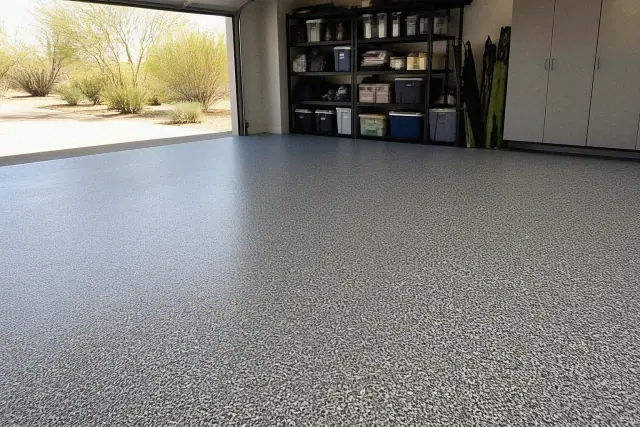
Glossy residential epoxy flooring with decorative flakes inside a garage in Paradise Valley, AZ.

Residential epoxy creates a single monolithic surface for garages, sunrooms, mudrooms, workshop additions, and casitas. With no grout lines or seams, the floor is easier to keep clear of stains, desert dust, and scorpions.

Concrete Polishing

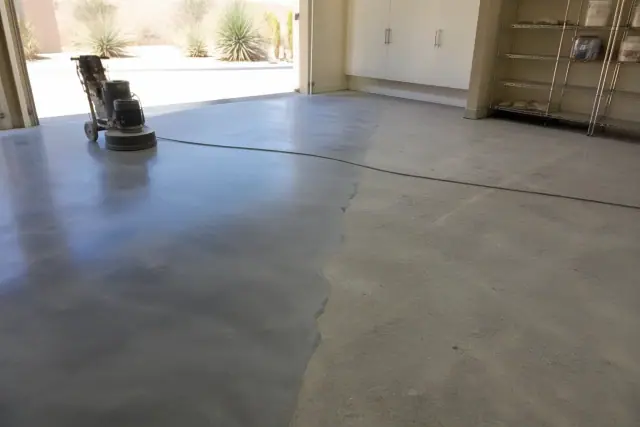
Half-polished concrete floor with grinding patterns in a residential garage in Paradise Valley, AZ.

Concrete polishing uses progressively finer diamond grits to grind and densify the slab, expose the chosen level of aggregate, and finish it with a penetrating hardener. It provides a durable, low-maintenance alternative for contemporary interior living spaces without a topical coating.

Concrete Staining & Grind and Seal

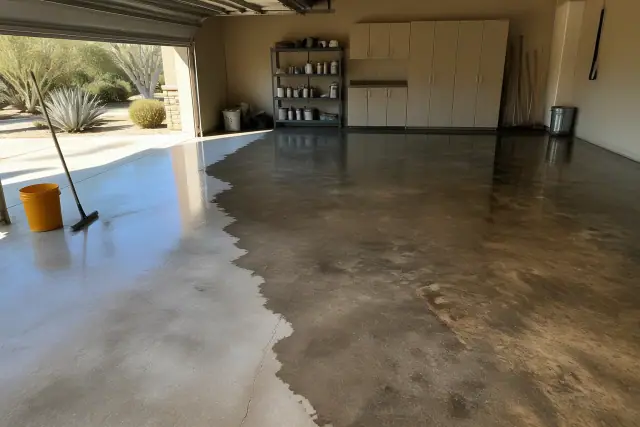
Concrete staining and grind and seal work on a garage floor in Paradise Valley, AZ.

Acid and water-based stains create variegated, translucent color within the concrete for patios and pool decks. Grind-and-seal mechanically profiles the slab and adds a penetrating sealer for an affordable surface that resists staining and dusting.

Compare Your Options

How to Choose the Right Floor Finish

Choose by traffic load, direct sunlight, downtime, appearance, slab moisture, and lifecycle cost. A polished or stained slab behaves differently from a build-up epoxy or polyaspartic coating, so the right answer depends on the room and the existing concrete.

Traffic Load and Daily Use

Residential garages, showcase car spaces, commercial kitchens, and maintenance areas place different point-load, abrasion, spill, and cleaning demands on a floor. Start with a system formulated for the traffic the space actually receives.

Sun and UV Exposure

Garages with afternoon sun through an open bay need more UV stability than enclosed rooms. A UV-stable polyaspartic topcoat helps limit amber discoloration on floors with regular direct exposure.

Return-to-Service Schedule

Traditional epoxy needs a longer cure window, while polyaspartic systems return to traffic faster. Choose around how long the garage or operating space can remain unavailable.

Finish and Slip Needs

Metallic pigment creates a custom display finish, while flake adds texture and helps conceal minor imperfections. Polished and stained concrete offer different visual effects when a build-up coating is not the preferred look.

Slab Condition and Moisture

Existing coatings, hairline cracks, spalling, efflorescence, and moisture vapor transmission all change the preparation plan. These conditions should be identified before choosing a coating or quoting the work.

Upfront Cost and Service Life

Compare preparation, coating layers, decorative options, cure requirements, and likely recoat cycles rather than product price alone. A properly profiled professional system is designed to outlast a lightly prepared retail kit.

Local Slab Challenges

Common Concrete and Coating Problems in Paradise Valley

Paradise Valley heat, direct UV, sudden humidity, dust, and moving soils create predictable failure points for bare concrete and weak coatings. Identifying the cause before installation helps determine the right repair, primer, coating, and topcoat.

Request Slab Assessment

Hot Tire Pickup

Heated tires can soften and lift an undercured or low-grade coating, leaving blisters where the vehicle rests. Proper profiling, commercial-grade materials, and a complete cure reduce that risk.

Moisture Vapor and Efflorescence

Vapor moving through an unsealed slab can bubble a coating from below. Visible efflorescence is a warning sign that moisture testing and possibly a vapor-barrier primer are needed before the base coat.

Cracks and Slab Movement

Caliche and expansive clay beneath Paradise Valley slabs can contribute to movement and recurring cracks. Crack chasing and flexible polyurea fillers can accommodate expected movement better than a rigid repair in these conditions.

UV Exposure and Ambering

Direct sunlight through open garage doors and unshaded windows can break down lower-grade epoxy and cause amber discoloration. Regularly exposed floors benefit from a UV-stable polyaspartic topcoat.

Dust, Stains, and Surface Wear

Monsoon dust, wet tires, oil, and daily traffic can stain and wear bare concrete. A suitable coating or sealer creates a more maintainable surface for garages, patios, and work areas.

Failed DIY Coatings

A roughly $200 DIY kit may begin peeling within 3 to 5 years when moisture testing, profiling, or cure control is skipped. Phoenix Epoxy Co. has refinished dozens of Paradise Valley garage floors that failed after epoxy was applied over inadequately prepared concrete.

Why Choose Us

Why Choose Phoenix Epoxy Co. in Paradise Valley?

Paradise Valley is a town of roughly 12,658 residents shaped by large custom lots, resort properties, and golf-course frontage, so floor finish expectations are high. Our crews understand the area's heat, soil movement, building safety review, and mix of older and newer slabs. We pair that local context with documented testing and surface-preparation practices.

Arizona-Licensed Local Experience

We are licensed through the Arizona Registrar of Contractors and familiar with Paradise Valley's estate garages, resort areas, lot grading, and varied slab exposures. Recommendations account for the concrete's age, orientation, condition, and use rather than square footage alone.

Documented Testing and Surface Standards

Moisture testing is consistent with ASTM F1869, while bond and surface-profile work follows ASTM C1583 and International Concrete Repair Institute guidance. Standards-based preparation helps reveal conditions that can shorten coating life.

Arizona Heat and UV Specifications

July and August heat, open-door sunlight, and monsoon humidity all affect material selection and cure planning. We use UV-stable topcoats, movement-tolerant repair materials, and architectural coatings formulated and applied to meet Arizona Department of Environmental Quality VOC limits.

Professional Installation

Our Epoxy Flooring Installation Process

Every project starts with the slab rather than the coating color. We assess conditions, mechanically prepare the concrete, complete necessary repairs, build the selected system, and observe the specified cure window before traffic returns.

01.

Assess the Slab

We inspect existing coatings, hairline cracking, spalling, moisture content, and efflorescence. The findings determine repair needs, vapor control, system type, and schedule.

02.

Diamond-Grind the Surface

A walk-behind diamond grinder removes laitance and opens the concrete pores for a mechanical bond. The target is an ICRI CSP 2-3 surface profile appropriate for the coating system.

03.

Repair Cracks and Joints

Cracks, spalling, and control joints are repaired with polyurea or epoxy filler selected for the movement expected in the slab. This creates a sounder surface before coating begins.

04.

Prime and Apply the Base Coat

If moisture exceeds acceptable thresholds, the floor receives a moisture-vapor-barrier primer. The epoxy or polyaspartic base coat is then applied at the mil thickness specified for the traffic load.

05.

Broadcast the Decorative Finish

Colored vinyl flake or metallic pigment is added while the base is ready to receive it. The broadcast method and coverage are matched to the selected texture and appearance.

06.

Topcoat, Cure, and Return to Service

A clear polyaspartic or urethane topcoat adds abrasion and UV resistance. The floor remains out of traffic for the manufacturer-specified cure window, and the usable schedule is reviewed before work starts.

Property Applications

Flooring Applications for Paradise Valley Homes and Businesses

Case Study 1: Custom estate garages: Metallic and flake systems can turn a finished garage or car-display space into a seamless surface coordinated with the home.

Case Study 2: Resort and commercial spaces: Epoxy systems can be formulated for foot traffic, kitchen spills, frequent cleaning, and phased off-hours installation.

Case Study 3: Casitas, patios, and pool settings: Residential epoxy suits casitas, while concrete stain can create translucent color on patios and pool decks; flake texture adds slip resistance where wet conditions matter.

Plan Your Project

Plan Your Paradise Valley
Floor
Consultation

Tell us how you use the space, what finish you want, and when it needs to return to service. Phoenix Epoxy Co. will walk the slab, check the conditions that affect preparation, and explain the appropriate system before preparing an estimate.

Local Epoxy Flooring Help

FAQs About Epoxy Flooring in Paradise Valley, AZ

These answers cover common questions about cost, cure time, preparation, floor options, and local service coverage. A slab assessment is the best way to narrow the choices for a specific property.

Call Our Epoxy Team

Professionally installed epoxy typically runs $4 to $7 per square foot in this market. The final price depends on surface preparation, the number of coats, and whether the system includes a flake or metallic finish.

A properly installed epoxy or polyaspartic system commonly lasts 15 to 20 years with normal residential use. Actual service life depends on preparation, traffic, UV exposure, maintenance, and the selected topcoat.

A polyaspartic installation can often be completed in a single day, with foot traffic in about 24 hours and vehicle traffic within 72 hours. Traditional epoxy generally needs a 5 to 7 day cure window.

Hot tire pickup occurs when a heated tire softens and partially lifts an undercured or low-grade coating. Proper concrete profiling, suitable coating solids, and a complete cure help prevent blistering beneath parked tires.

Diamond grinding removes laitance and opens concrete pores so the coating can form a mechanical bond. Applying epoxy over a dusty, smooth, or lightly prepared slab raises the risk of peeling and uneven adhesion.

Yes. We check moisture content and look for efflorescence that can indicate vapor transmission before applying a coating. If readings exceed acceptable thresholds, the preparation plan may include a moisture-vapor-barrier primer.

Epoxy provides a durable build and supports solid, flake, and metallic finishes, while polyaspartic cures faster and handles direct UV exposure better. The right choice depends on sun exposure, downtime, traffic, appearance, and budget.

Flake texture adds slip resistance and helps disguise small slab imperfections, making it useful around wet tires and pool equipment rooms. The chips are broadcast into the base coat and sealed beneath a clear topcoat.

Metallic pigment moves through a clear epoxy base to create a marbled, dimensional appearance. No two pours reproduce exactly the same pattern, which makes the finish well suited to showcase garages, wine rooms, and casitas.

Cracks, spalling, and control joints should be evaluated and repaired before coating. We use polyurea or epoxy filler matched to expected slab movement, but the repair plan depends on the crack and concrete condition.

Yes. The source service range includes sunrooms, mudrooms, workshops, casitas, patios, pool decks, resort spaces, restaurants, retail floors, maintenance areas, and storage buildings. The selected system is matched to moisture, traffic, cleaning, and UV exposure.

Polishing mechanically refines and densifies concrete without a topical coating, while stain creates translucent color within the slab. Grind-and-seal profiles the surface and applies a penetrating sealer to limit staining and dusting at a lower build cost.

Quality DIY materials run roughly $1.45 to $5.21 per square foot before equipment rental, preparation tools, and personal time. The apparent savings can shrink if moisture testing or mechanical profiling is skipped and the floor later needs refinishing.

Most two-car garage installations take two to three days from the start of work to full cure, with polyaspartic systems at the faster end. The slab condition, repairs, coating layers, and manufacturer cure window determine the actual schedule.

The documented service area includes Paradise Valley, North Phoenix near the Phoenix Mountains Preserve, Scottsdale, Carefree, and the Desert Ridge corridor. Select larger commercial and industrial projects are also considered across Central Arizona.