Proudly serving Phoenix, Scottsdale, Mesa, Chandler, Gilbert, Tempe & surrounding areasCall or Text 24/7: 480-264-9663
Aerial view of a residential neighborhood with saguaros and desert foothills in Phoenix, AZ.

Garage Floor Epoxy and Industrial Concrete Flooring in Tempe, AZ

Phoenix Epoxy Co. installs garage floor epoxy and garage floor coatings for homes and businesses across Tempe. Our options include polyaspartic top coats, epoxy flake and metallic finishes, commercial and industrial epoxy flooring, concrete polishing, concrete staining, and grind-and-seal treatments. We prepare residential, retail, office, showroom, warehouse, and manufacturing slabs for the system selected. Every recommendation starts with the slab condition, intended use, and the heat, UV exposure, and soil movement described in the Tempe project environment.

Unshaded concrete in Tempe can exceed 140 degrees, while monsoon season from June through September brings sudden humidity changes. We assess existing coatings, cracks, pitting, oil contamination, and moisture before specifying a floor. A 100% solids epoxy base coat can be paired with a UV-stable polyaspartic or urethane top coat when the exposure and use call for it. Request a free on-site estimate for a firm price based on square footage, preparation, repairs, and finish.

Tempe had roughly 180,587 residents in the 2020 Census, with projects ranging from housing near Arizona State University to retail around Mill Avenue and industrial properties along Priest Drive and University Drive. We work throughout Central and South Tempe, the Kyrene corridor, and nearby East Valley communities named in our service area.

★ ★ ★ ★ ★4.9/5 Average Rating - 20+ Years of Experience - Tempe Epoxy Flooring Contractor Specialists - Residential & Commercial
Flooring Services

Epoxy Flooring Services in Tempe, AZ

Choose a coating or concrete finish around the slab, traffic, appearance, and maintenance needs rather than a one-size-fits-all package. Phoenix Epoxy Co. serves Tempe plus Mesa, Chandler, Gilbert, Scottsdale, Ahwatukee, Guadalupe, and supported Maricopa County communities; property owners comparing other Arizona markets can also review our Glendale, AZ location page.

Garage Floor Epoxy

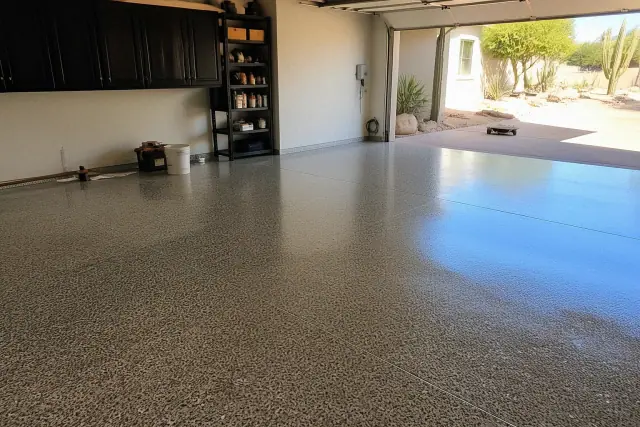
Freshly applied high-gloss epoxy floor with flake broadcast in a residential garage in Tempe, AZ.

A typical two-car or three-car garage system begins with diamond grinding and moisture testing, followed by crack repair, a 100% solids epoxy base coat, and a polyaspartic or urethane top coat. This build addresses hot-tire lifting, oil stains, and hairline cracks before the finished floor goes into service.

Explore Service

Garage Floor Coatings

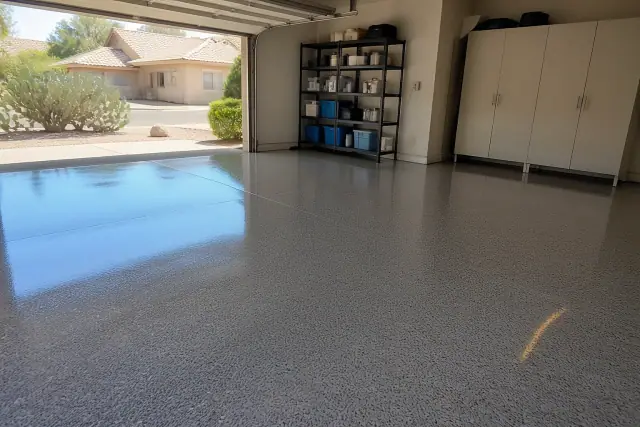
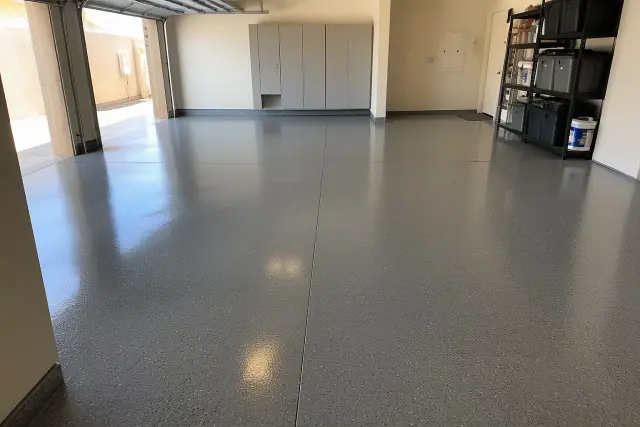
Completed epoxy floor coating with a high-gloss speckled finish in a residential garage in Tempe, AZ.

Garage floor coatings create a cleanable, non-porous barrier over properly prepared concrete. The finished surface resists oil, brake fluid, tire residue, grease, and the concrete dust that can make a garage difficult to use as a workshop, home gym, or extra living space.

Explore Service

Polyaspartic Floor Coatings

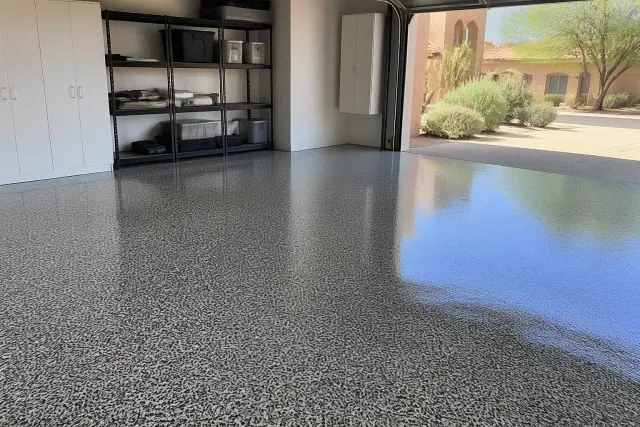
High-gloss polyaspartic floor with quartz flakes in a multi-car garage in Tempe, AZ.

Polyaspartic coatings cure in hours instead of days and remain workable in Arizona conditions where traditional epoxy can struggle above 90 degrees. Used as a top coat over an epoxy base, polyaspartic adds UV stability, chemical resistance, and a little flexibility as the slab expands and contracts.

Explore Service

Epoxy Flake Flooring

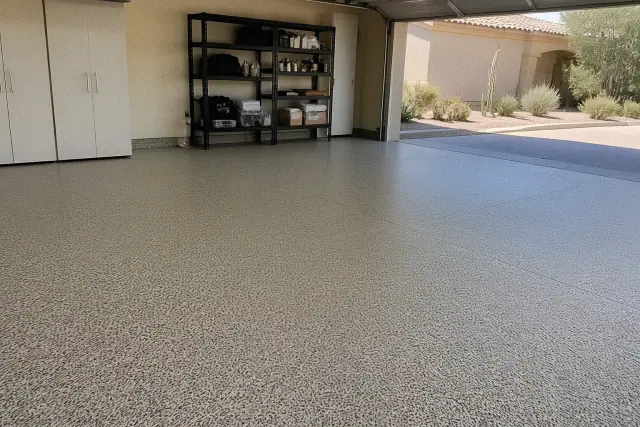
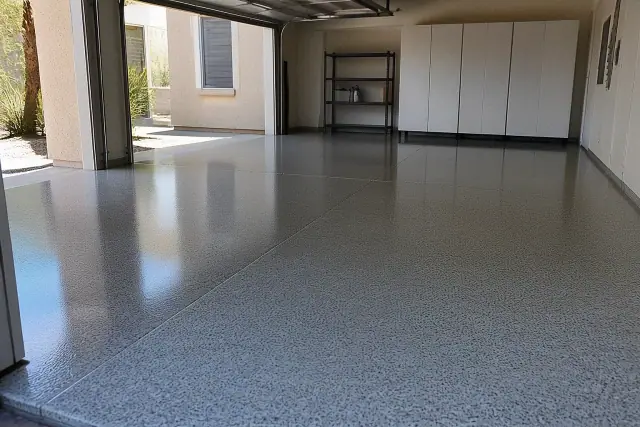
Epoxy flake flooring installed in a residential garage with desert landscaping visible in Tempe, AZ.

Vinyl color flakes are broadcast into the wet epoxy base and sealed beneath a clear polyaspartic top coat. The result adds decorative variation and slip-resistant texture while helping disguise minor slab imperfections in garages and other working floors.

Metallic Epoxy Flooring

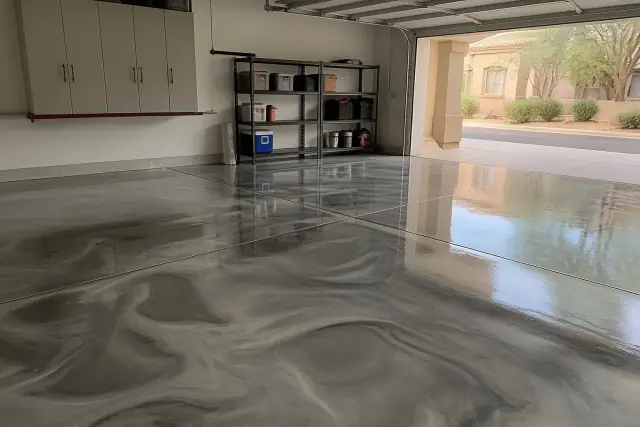
Glossy marbled metallic epoxy flooring in a residential garage in Tempe, AZ.

Metallic pigments are moved through the coating with air and tools to produce a three-dimensional, marbled appearance in which no two floors look alike. This premium finish fits luxury garages, home bars, and statement showroom floors that prioritize visual depth.

Commercial Epoxy Flooring

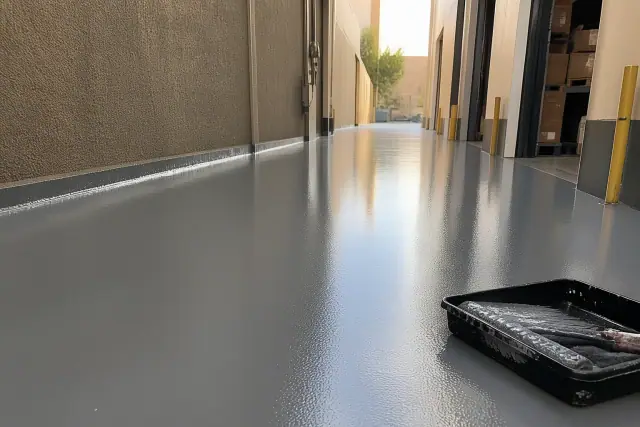
Glossy commercial epoxy flooring in an industrial warehouse building in Tempe, AZ.

Tempe showrooms, retail floors, and office lobbies need a finish that handles daily foot traffic and rolling equipment without sacrificing appearance. High-gloss or satin systems can be selected around lighting and branding needs, with installation scheduled around business hours to reduce downtime.

Industrial Epoxy Flooring

Finished industrial epoxy flooring in a residential garage in Tempe, AZ with storage shelving along the walls.

Warehouses and manufacturing floors exposed to forklifts, chemical spills, abrasion, and heavy point loads may require higher-mil novolac or high-build epoxy. Surface preparation follows ICRI guidelines before the industrial coating is applied.

Residential Epoxy Flooring

High-gloss residential epoxy flooring with micro-flakes in a Tempe, AZ garage.

Residential coatings support garages that also function as workshops, home gyms, storage areas, or cleaner multipurpose rooms. For rentals and investment homes near ASU, a durable cleanable surface can also reduce staining and turnover damage between tenants.

Concrete Polishing

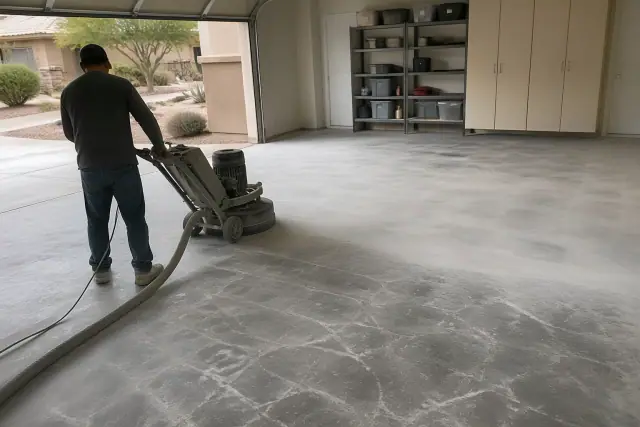
Concrete floor polishing in progress with a heavy-duty grinder in a residential garage in Tempe, AZ.

Concrete polishing uses diamond-impregnated pads in progressive grits to grind and densify the slab rather than cover it with a topical coating. It produces a low-maintenance, high-gloss finish for retail and office spaces that want the concrete itself to remain visible.

Concrete Staining & Grind and Seal

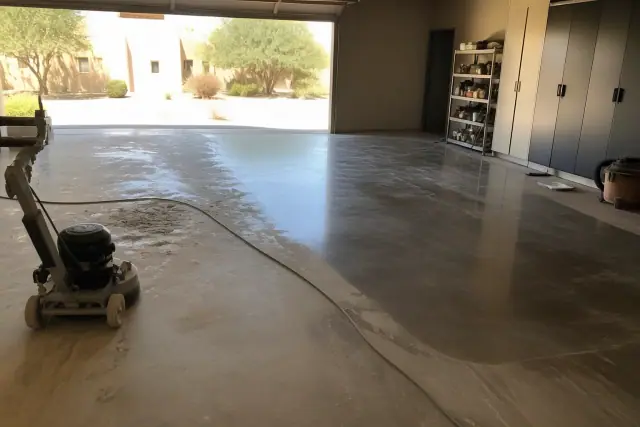
Concrete floor mid-grind and stain process in a residential garage in Tempe, AZ.

Concrete staining creates non-uniform color variation with acid-based or water-based stains, often followed by a sealer on patios, walkways, or interior floors. Grind and seal mechanically flattens the surface before a penetrating or film-forming sealer is applied, offering a budget-friendly restoration option without a full flake or metallic build.

System Selection

How to Choose the Right Epoxy Floor for Tempe, AZ

The best fit depends on what is already on the concrete, how much sun and traffic the floor receives, the moisture readings, the desired finish, and the time available for curing. We compare those conditions during the on-site estimate before recommending a base coat, broadcast, and top coat.

Inspect the Existing Slab

Old paint, sealers, failed coatings, oil saturation, cracks, spalling, and pitting change the preparation required. A direct slab inspection helps determine whether removal, repair, or moisture mitigation belongs in the estimate.

Plan for Heat and UV

West-facing garage doors and exposed driveways need a top coat selected for sustained sun and thermal movement. UV-stable polyaspartic or aliphatic urethane helps reduce the yellowing and chalking associated with standard epoxy exposure.

Measure Moisture Vapor

Caliche and clay-heavy soils can move moisture vapor through the slab, especially during monsoon humidity swings. Calcium chloride or relative humidity testing identifies that risk before the base coat traps moisture.

Match Traffic and Chemicals

A home garage, retail showroom, and forklift aisle place very different loads on a floor. Traffic, rolling equipment, point loads, abrasion, and chemical exposure help determine coating thickness and whether a high-build or novolac system is appropriate.

Choose the Finish and Grip

Flake adds texture and disguises minor imperfections, metallic pigment creates marbled visual depth, and polished or stained concrete keeps more of the slab visible. Wet areas and vehicle bays may also benefit from a slip-resistant flake or aggregate broadcast.

Balance Cost and Cure Time

Installed epoxy in Arizona generally runs $4 to $10 per square foot, with system build, repairs, removal, and decorative work shaping the final price. Fast-curing polyaspartic can shorten downtime, while finish complexity and additional preparation can raise the investment.

Tempe Floor Risks

Common Garage Floor Problems on Tempe Properties

Coating trouble usually begins below the finish: heat, UV exposure, moisture vapor, surface contamination, cracking, or inadequate mechanical preparation. Recognizing the symptom before recoating helps prevent the same failure from returning.

Request a Floor Assessment

Hot-Tire Pickup and Stains

Hot tires can soften weak coatings and lift them from the slab, while oil, brake fluid, and tire residue soak into bare concrete. Proper grinding, contaminant removal, and a compatible coating system address the number one complaint described by homeowners after a big-box kit fails.

UV Yellowing and Chalking

Standard epoxy can yellow or chalk under sustained desert sun, especially near west-facing openings. A UV-stable polyaspartic or aliphatic urethane top coat protects the appearance better than leaving straight epoxy exposed.

Heat Blisters and Delamination

Slab temperatures above 140 degrees can disrupt cure windows and contribute to blistering, bubbling, or delamination, sometimes within the first year. Heat-tolerant formulations and adjusted installation timing reduce that risk.

Moisture Vapor Bubbles

Humidity and vapor emission can become trapped beneath a non-porous coating when the slab is not tested. Bubbling, peeling, and delamination are common signs that moisture readings or mitigation were overlooked.

Cracks, Spalling, and Pitting

Hairline cracks, spalled areas, and pits create weak points and visible defects beneath a new finish. Epoxy or polyurea crack filler and targeted repair are completed after grinding and before the base coat.

Old Coatings and Contamination

Paint, sealer, a failed prior coating, or oil saturation can prevent a new system from bonding. Coating directly over those layers may lead to bubbling and peeling within months rather than years, so mechanical removal is a required preparation step.

Why Choose Us

Why Choose Phoenix Epoxy Co. in Tempe, AZ?

Phoenix Epoxy Co. combines condition-based system selection with mechanical preparation, moisture testing, and clear project pricing. We also account for contractor requirements and any project-specific permitting instead of treating every floor as a cosmetic roll-on job.

Preparation to ICRI Guidelines

Industrial work follows ICRI surface preparation guidance, and every coating project starts with the mechanical profile the slab needs. Diamond grinding opens the concrete pores and removes incompatible paint, sealer, or failed material before coating.

Licensed and Insured Work

Phoenix Epoxy Co. carries contractor licensing through the Arizona Registrar of Contractors and maintains liability insurance on every job. When a project scope requires a permit, we work through the City of Tempe Building Safety Division.

Firm, Itemized Estimates

The free on-site estimate measures square footage and identifies crack repair, moisture mitigation, coating removal, and finish complexity before work starts. The resulting firm price shows what is included instead of relying on square footage alone.

Six-Step Process

Our Epoxy Installation Process in Tempe, AZ

A durable coating depends on the work completed before and between coats. Our six-step process moves from direct inspection through mechanical preparation, repairs, moisture confirmation, system application, and final cure inspection.

01.

Inspect and Measure

During the free on-site estimate, we measure square footage, identify existing paint or sealer, review slab condition, and discuss traffic, appearance, and scheduling needs.

02.

Diamond-Grind the Concrete

Mechanical grinding opens the slab pores and removes old coatings, paint, and sealer so the new system can bond to prepared concrete.

03.

Repair Cracks and Damage

Cracks, spalling, and pitting are repaired with epoxy or polyurea crack filler, and contaminated areas are addressed before the coating build begins.

04.

Test for Moisture

Calcium chloride or relative humidity testing confirms whether vapor conditions are suitable for the planned base coat or require additional mitigation.

05.

Apply the Selected System

We install the 100% solids epoxy base coat at the specified mil thickness, then broadcast vinyl flake or manipulate metallic pigment when the chosen finish calls for it.

06.

Top-Coat, Cure, and Inspect

A polyaspartic or urethane top coat adds UV stability and chemical resistance before the floor is inspected. Many two-car garage coatings are installed in one day, while full cure for vehicle traffic typically takes 24 to 72 hours depending on the top coat.

Flooring Applications

Epoxy Flooring Outcomes for Tempe Homes & Businesses

Case Study 1: Garages and multipurpose rooms: A sealed, cleanable surface resists tire residue, oil, grease, and dust while supporting parking, workshops, home gyms, or extra living space.

Case Study 2: Retail, showroom, and office floors: High-gloss or satin finishes can balance appearance with daily foot traffic and rolling equipment around Tempe Marketplace and the Mill Avenue corridor.

Case Study 3: Warehouses and manufacturing bays: Higher-build systems can be specified around forklifts, abrasion, chemical spills, and heavy point loads in industrial properties near the Tempe and Guadalupe corridor.

Plan Your Floor

Schedule a Tempe Epoxy Floor
Consultation

Request a free on-site estimate to compare coating and concrete-finish options for your Tempe property. We will inspect the slab, discuss traffic and appearance, identify preparation needs, and provide a firm price before work begins.

Tempe Epoxy Help

FAQs About Garage Floor Epoxy in Tempe, AZ

These answers cover the cost, preparation, curing, durability, and finish decisions Tempe property owners ask about most often. A direct slab inspection is still needed for a firm project recommendation and price.

Call Our Epoxy Team

A 20x20 garage is roughly 400 square feet and typically runs $1,600 to $4,000 installed, depending on the system. A basic epoxy coating sits toward the lower end, while flake or metallic finishes with a polyaspartic top coat cost more. Existing cracks, oil saturation, or failed coatings can add preparation time.

Epoxy depends on correct surface preparation and moisture testing; skipping either can lead to peeling, bubbling, or delamination within the first couple of years. It can also be slippery when wet without a flake or aggregate broadcast, and standard epoxy may yellow in direct Tempe sun without a UV-stable top coat. The garage may be off-limits for one to three days depending on cure time.

Most two-car garages in the Tempe area run $2,000 to $4,500 for a standard epoxy system. Premium systems with polyaspartic top coats or decorative flake and metallic finishes generally run $4,500 to $7,000. Square footage, coat count, crack repair, and removal of a failed prior coating affect the final estimate.

Most residential garage floor coatings are cosmetic surface treatments and generally do not require a City of Tempe permit. Commercial or industrial work may require permitting when the scope includes structural repair or specific commercial building-code requirements. Phoenix Epoxy Co. checks the project scope and handles required paperwork when a permit applies.

A professionally installed epoxy or polyaspartic system typically lasts 10 to 20 years, depending on UV exposure, top-coat selection, traffic, and maintenance. West-facing garages benefit from a UV-stable polyaspartic top coat. DIY kits and poorly prepared floors may peel or lift within 3 to 5 years.

Existing paint, sealer, or a failed coating generally needs to be removed by diamond grinding before a new system is installed. Coating over an incompatible layer can trap moisture and prevent proper adhesion, leading to bubbling or peeling. Removal time is identified during the on-site estimate and included in the project price.

Polyaspartic cures in hours instead of the multi-day cure associated with traditional epoxy and resists UV yellowing better. Phoenix Epoxy Co. commonly uses a hybrid build: epoxy for base-coat adhesion and thickness, then polyaspartic for UV stability and fast cure. The right choice still depends on slab condition, exposure, and use.

Options include epoxy flake flooring, metallic epoxy, concrete polishing, concrete staining, and grind-and-seal finishes. Flake adds texture, metallic pigment creates a marbled appearance, polishing densifies the slab, staining adds non-uniform color, and grind and seal provides a simpler restoration finish.

Common causes include skipped diamond grinding, ignored moisture readings, trapped vapor, incompatible existing coatings, and cure conditions that do not account for extreme slab heat. Caliche and clay-heavy soils plus monsoon humidity can increase moisture-vapor risk. Testing and mechanical preparation address those conditions before the base coat is applied.

The slab is inspected, diamond-ground, and cleared of paint, sealer, or failed coating. Cracks, spalling, and pitting are repaired, then calcium chloride or relative humidity testing checks moisture conditions. The selected epoxy base coat is applied only after the surface profile and readings are suitable.

Commercial systems can be specified for foot traffic, rolling equipment, lighting, and branding in showrooms, retail floors, and office lobbies. Warehouses and manufacturing bays may need higher-mil novolac or high-build epoxy for forklift traffic, chemical spills, abrasion, and heavy point loads. Industrial surface preparation follows ICRI guidelines.

Many two-car garage coatings can be installed in one day, but installation time and full cure are not the same. Vehicle traffic typically requires 24 to 72 hours depending on the top coat, temperature, and selected system. The floor is inspected before walk-back and vehicle use.

Epoxy or polyaspartic coatings typically last 10-20 years with occasional mopping, while bare sealed concrete generally needs resealing after 3-5 years. Garage tile typically lasts 10-15 years but adds grout cleaning, and rubber mats or tiles typically last 5-10 years but can soften or shift in extreme heat. Actual service life depends on preparation, exposure, traffic, and maintenance.

Arizona epoxy flooring generally runs $4 to $10 per square foot installed, while labor commonly runs $4 to $9 per square foot and materials add about $2 to $6 per square foot. Crack repair, moisture mitigation, failed-coating removal, garage size, coat count, metallic pigment, and custom flake blends can move the price. Grind and seal often falls near the lower end because it skips a full decorative build.

A well-installed coating can potentially return 500 to 1,100 percent of project cost in added resale value, particularly where buyers expect a move-in-ready garage. Actual value depends on the property, market, system quality, and installation condition. A durable floor also makes workshops, home gyms, and multipurpose garages easier to clean and maintain.