Proudly serving Phoenix, Scottsdale, Mesa, Chandler, Gilbert, Tempe & surrounding areasCall or Text 24/7: 480-264-9663
Aerial view of a residential neighborhood with saguaros and desert foothills in Phoenix, AZ.

Residential Epoxy Flooring for Phoenix, AZ Patios, Garages and Interiors

Phoenix Epoxy Co. installs residential epoxy flooring for garages, patios, workshops, laundry rooms, mudrooms, and interior living spaces in Phoenix, Arizona. Our residential options include garage floor epoxy, polyaspartic coatings, epoxy flake flooring, and metallic epoxy flooring. We also provide concrete polishing, staining, and grind and seal work for homeowners who want a different finish.

Phoenix heat, monsoon moisture, and daily wear can leave bare concrete cracked, dusty, pitted, or stained. We prepare slabs with diamond grinding instead of acid etching, evaluate moisture conditions, and install 100% solids epoxy or polyaspartic systems suited to the space. Call for a free on-site assessment so the coating plan reflects your slab's actual condition rather than a one-size-fits-all quote.

Summer slab temperatures regularly exceed 140 degrees Fahrenheit in Phoenix, making surface preparation, coating chemistry, and cure timing especially important.

Phoenix Epoxy Co. provides residential epoxy flooring in Phoenix and the surrounding metro, including Scottsdale, Mesa, Tempe, Chandler, Glendale, and Gilbert.

★ ★ ★ ★ ★4.9/5 Average Rating · 20+ Years of Experience · Thousands of Customers Helped · Licensed & Insured · Residential & Commercial

Residential Epoxy Flooring Options & Benefits

What Is Residential Epoxy Flooring?

Residential epoxy flooring is a resin coating that bonds mechanically to properly ground concrete, seals the slab's pores, and creates a durable finished surface. It is commonly used where bare concrete would otherwise absorb oil, moisture, dust, and household chemicals.

The system may combine a primer, base coat, decorative broadcast, and protective topcoat. Solid colors, vinyl flake blends, and mica-based metallic pigments provide different looks while the resin layers add chemical and abrasion resistance.

For sun-exposed areas, a UV-resistant polyaspartic topcoat can limit yellowing and handle thermal stress better than standard epoxy alone. Interior spaces can also be polished, stained, or ground and sealed when a resin coating is not the right fit.

Benefits of Residential Epoxy Flooring

A properly installed epoxy floor protects concrete while making garages and living areas easier to maintain. The coating can be tailored for heat exposure, wet conditions, vehicle traffic, and the desired finish.

  • Seals concrete against oil, coolant, fertilizer, and pool chemicals
  • Resists dust infiltration and everyday abrasion
  • Handles vehicle weight and dropped tools in garages
  • Offers solid color, flake, and metallic design choices
  • Supports textured finishes for better wet-area traction
  • Cleans with sweeping and occasional neutral-pH mopping
  • Protects against hot tire pickup when the right system is used
  • Typically lasts 15 to 20 years with proper installation and care
Floor Coating Services

Residential Epoxy Flooring Services

We match the preparation method, coating chemistry, finish, and topcoat to the slab and the way the room is used. These services cover high-traffic garages, sun-exposed patios, workshops, rental properties, and finished interior spaces.

Garage Floor Epoxy

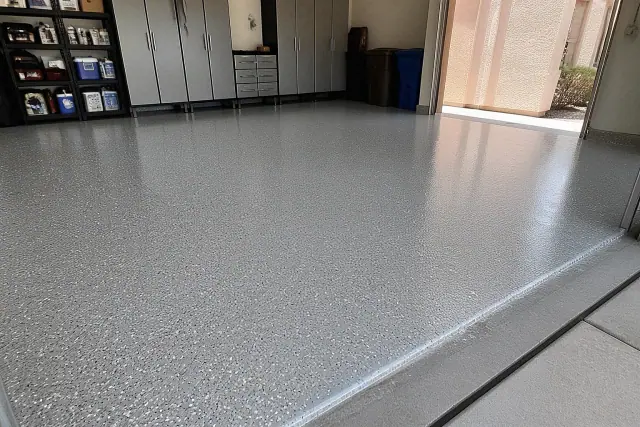
Glossy garage floor epoxy with decorative flakes in a residential garage in Phoenix, AZ.

Garage epoxy creates a sealed surface that stands up to vehicle traffic, dropped tools, battery acid, motor oil, and desert dust. Most two-car garage epoxy installations take two to three days from grinding through final cure, depending on the selected coating and the time required before vehicle traffic resumes.

Request Estimate

Polyaspartic Floor Coatings

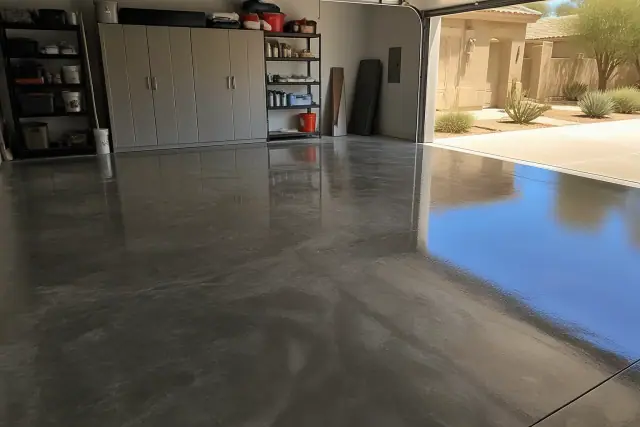
Polyaspartic floor coating on a garage floor in Phoenix, AZ, with storage cabinets and a view of desert landscaping.

Polyaspartic coatings harden in hours rather than days, resist UV yellowing better than standard epoxy, and tolerate a wider installation temperature range. They are often the better option for west-facing garages, direct sun exposure, or homeowners who need the garage back in service within a day.

Request Estimate

Metallic Epoxy Flooring

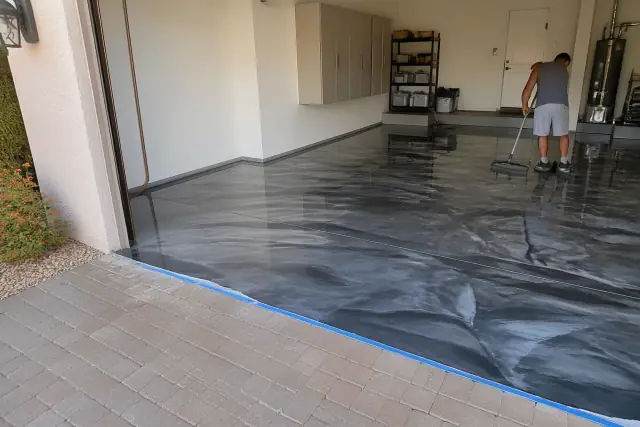
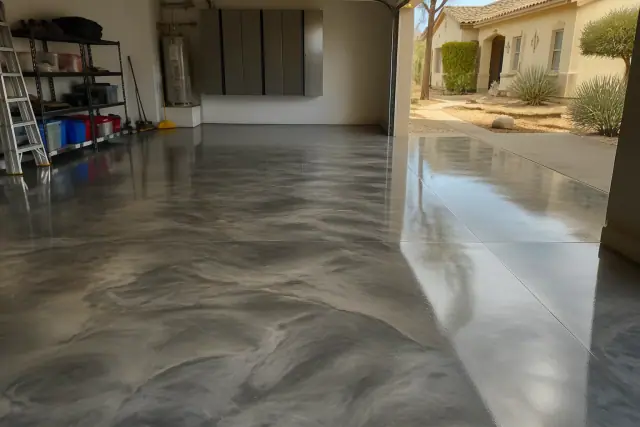
Fresh metallic epoxy flooring installation in a residential garage in Phoenix, AZ.

Metallic epoxy suspends mica-based pigments in a clear or tinted resin base, then manipulates them into marbled, lava-like, or three-dimensional effects. Each pour is unique, making this finish well suited to great rooms, showroom garages, entertainment areas, and finished hobby spaces.

Request Estimate

Epoxy Flake Flooring

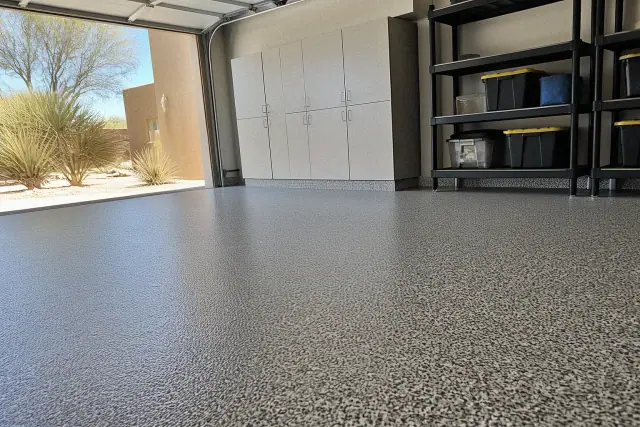
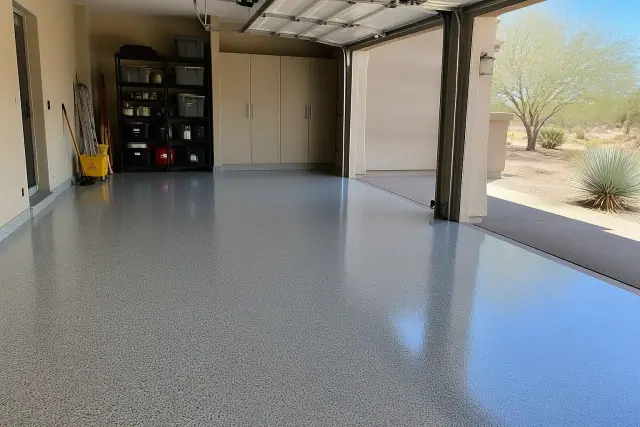
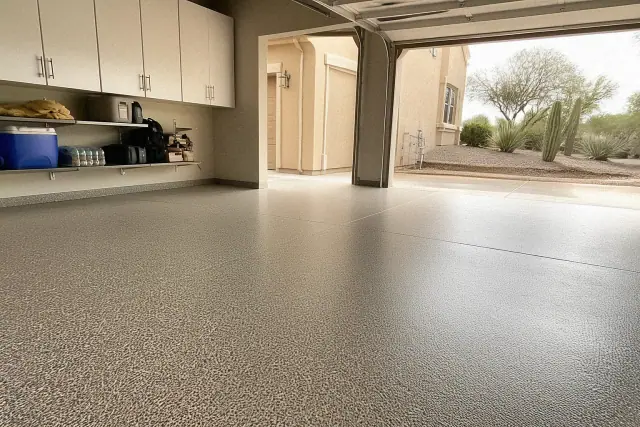
Epoxy flake flooring installed in a residential garage in Phoenix, AZ.

Flake flooring broadcasts colored vinyl chips into a wet epoxy base before sealing them beneath a clear topcoat. Neutral grays, tans, and bolder blends add visual depth and texture for garages, patios, pool-adjacent areas, and workshops.

Request Estimate

Concrete Polishing

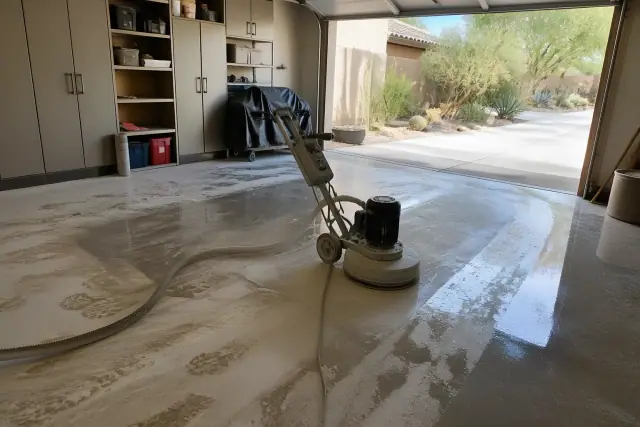
Concrete polishing process with a floor grinder on a residential garage floor in Phoenix, AZ.

Polished concrete mechanically grinds and densifies the slab to a glossy or satin sheen without adding a resin topcoat. It provides an industrial, minimalist finish for interior rooms where the concrete itself should remain visible.

Request Estimate

Concrete Staining and Grind & Seal

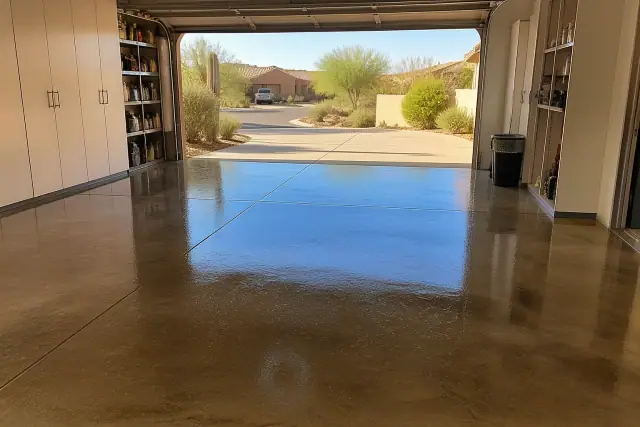
Finished concrete floor with stain and sealant in a residential garage in Phoenix, AZ.

Concrete staining changes the slab's appearance while grind and seal uses mechanical grinding followed by a penetrating sealer. Grind and seal costs less than a full epoxy system but provides less chemical and abrasion resistance, so it is generally better suited to lower-traffic interior floors.

Request Estimate
Coating & Finish Options

Types of Residential Floor Finishes

The right finish depends on sunlight, traffic, moisture, chemical exposure, desired traction, design goals, maintenance expectations, and budget. We explain how each option performs before recommending a coating or concrete treatment.

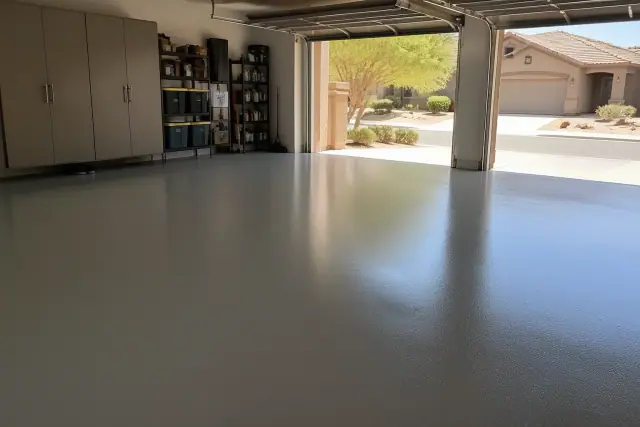
Smooth, glossy solid-color epoxy flooring in a residential garage in Phoenix, AZ.

Solid-Color Epoxy

Solid-color epoxy provides a clean, uniform surface and a strong resin base for shaded garages and interior rooms. It is a practical option when protection and straightforward color coordination matter more than decorative effects.

  • Uniform color from edge to edge
  • 100% solids epoxy options
  • Strong bond to diamond-ground concrete
  • Chemical- and stain-resistant surface
  • Well suited to shaded garages and interiors
Request Estimate
Glossy polyaspartic garage floor coating in a residential Phoenix, AZ home with storage cabinets and desert views.

UV-Resistant Polyaspartic

Polyaspartic is a faster-curing alternative that better resists UV yellowing and hot tire pickup in extreme heat. Phoenix driveway surface temperatures regularly exceed 150 degrees in July and August, making this chemistry especially useful near west-facing garage doors.

  • Better UV stability than standard epoxy
  • Faster cure for shorter downtime
  • Wider installation temperature range
  • Stronger fit for direct sunlight
  • Improved resistance to hot tire pickup
Request Estimate
Decorative metallic epoxy flooring with a marbled finish in a residential garage in Phoenix, AZ.

Decorative Metallic Epoxy

Metallic epoxy pairs decorative mica pigments with a commercial-grade resin base. The palette can draw from existing tile, cabinetry, or exterior stone accents while the topcoat supplies the scratch and chemical resistance needed for daily use.

  • Marbled and lava-like visual movement
  • No two finished pours look identical
  • Custom palettes tied to existing finishes
  • Suitable for statement interior spaces
  • Protective topcoat over the decorative layer
Request Estimate
Newly installed textured flake epoxy flooring in a residential garage in Phoenix, AZ.

Textured Flake Flooring

Flake systems combine a wet epoxy base, colored vinyl chips, and a clear protective topcoat. The textured finish improves slip resistance around covered patios and pool-adjacent areas where monsoon rain or splash-out can leave the surface wet.

  • Neutral gray and tan blends
  • Bold multicolor combinations
  • Added texture for wet conditions
  • Clear topcoat seals the chip layer
  • Simple sweeping and neutral-pH cleaning
Request Estimate
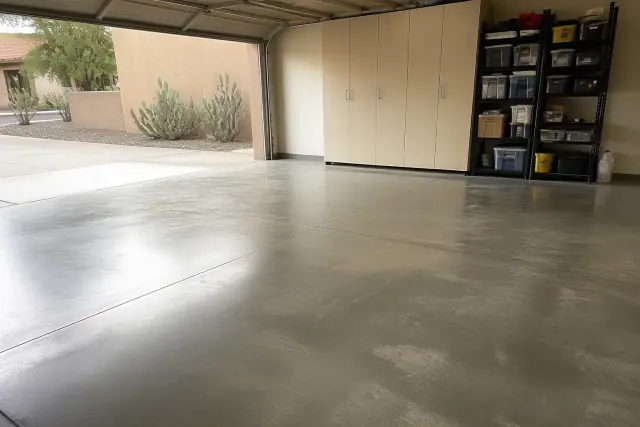
Polished concrete floor in a residential garage with storage cabinets, seen from the Phoenix, AZ driveway.

Polished or Ground-and-Sealed Concrete

Polishing densifies the existing slab for a satin or glossy finish, while grind and seal applies a penetrating sealer after lighter mechanical grinding. Sealed concrete generally needs recoating every 3 to 5 years, compared with the longer service life of a properly installed epoxy system.

  • Exposes the character of the existing slab
  • Glossy or satin polished appearance
  • No resin topcoat on polished concrete
  • Lower initial cost for grind and seal
  • Best considered for lower-traffic interiors
Request Estimate
Finding Your Right Fit

Choosing the Right Floor Coating Approach

A shaded garage may perform well with traditional epoxy, while a west-facing garage or sun-exposed patio often benefits from polyaspartic UV resistance. Flake helps where traction matters, metallic creates a custom statement surface, and polished or ground-and-sealed concrete suits homeowners who prefer the slab itself as the finish. We compare these tradeoffs against slab condition and actual room use during the assessment.

Diamond-Ground Surface Preparation

We mechanically grind each floor with diamond tooling to open the concrete pore structure to an ICRI CSP 3 profile or higher. This creates a stronger mechanical bond than acid etching and helps prevent early peeling or bubbling.

Phoenix Climate System Selection

System recommendations account for direct sun, extreme slab temperatures, low humidity, monsoon moisture, and hot tires arriving from 120-degree asphalt-adjacent driveways. We use moisture vapor barriers where slab-on-grade conditions call for them and adjust cure timing for ambient and slab temperatures.

Documented Installation Quality

Crew leads check and document moisture readings, ambient temperature, and slab temperature before each coat. They also control mil thickness to manufacturer coverage rates, supporting scratch- and stain-resistant performance over 15-plus years.

What Sets Us Apart

Why Choose Us for Residential Epoxy Flooring Installation?

Phoenix Epoxy Co. follows ICRI surface-preparation guidance and the coating manufacturer's application specifications instead of stretching material or skipping grinding steps. We inspect the slab, select the system for its real exposure, and explain maintenance before the job is complete. Request a free on-site assessment to compare options for your floor.

Get a Free Assessment

Heat Cycling and Thermal Shock

Across Phoenix's 517.9 square miles, unshaded concrete can become much hotter than the surrounding air. Repeated expansion and contraction can contribute to cracks, pitting, and spalling, while a properly selected coating creates a sealed protective surface.

Hot Tire Pickup

Heat-softened tires can pull at a weak or unsuitable garage coating after a vehicle is parked. Proper mechanical preparation, adequate coating thickness, and a heat-resistant polyaspartic option help the finished floor withstand this Phoenix garage problem.

Moisture Vapor Pressure

Arizona's caliche soil layer can trap moisture unpredictably beneath older slab-on-grade floors. We inspect for moisture content and test for hydrostatic pressure or vapor emission where conditions raise concerns, then apply a moisture vapor barrier when the slab requires it.

Peeling, Bubbling, and Delamination

Early coating failure often starts with inadequate preparation, trapped moisture, or application outside manufacturer-specified conditions. Grinding, moisture checks, crack work, and temperature readings address the bond conditions before primer is applied.

Oil and Chemical Stains

Bare concrete absorbs motor oil, coolant, battery acid, fertilizer, and pool chemicals through its open pores. A sealed epoxy or polyaspartic surface improves stain resistance and makes prompt cleanup easier.

Slippery Wet Surfaces

Smooth epoxy can become slippery when wet, particularly near patios and pool areas during monsoon rain or splash-out. A flake broadcast or texture additive creates more surface texture for locations where wet traction is a priority.

How It Works

Our Residential Epoxy Flooring Process

A durable coating depends on what happens before, during, and after the resin is applied. Our process moves from slab assessment through mechanical preparation, sequenced coating application, cure management, and a final homeowner walkthrough.

01.

Inspect the Slab

We inspect moisture content, existing coatings, cracks, control joints, and the way the space is exposed and used. Structural concerns are flagged before the coating scope moves forward.

02.

Test Moisture Conditions

Where slab-on-grade construction raises concerns, we evaluate hydrostatic pressure and moisture vapor emission. Those findings determine whether a moisture vapor barrier belongs beneath the coating layers.

03.

Diamond-Grind the Surface

Diamond tooling removes weak surface material and opens the concrete to the required profile without relying on acid etching. This mechanical preparation gives the primer and base coat a sound surface for adhesion.

04.

Route and Fill Cracks

Cracks are routed and filled, and existing coating residue or other bond-breaking material is removed. Control joints and edges are evaluated so the finished scope reflects the slab's actual condition.

05.

Apply the Coating Layers

Primer, base coat, decorative broadcast when selected, and topcoat are applied in sequence. Plural-component spray or squeegee-and-roller application is chosen for the system, with mil thickness controlled to the manufacturer's coverage rates.

06.

Cure, Inspect, and Walk Through

Full cure for vehicle traffic typically takes 24 to 72 hours depending on the system. We inspect sheen, flake distribution, and edge detailing with the homeowner, then explain sweeping, neutral-pH cleaning, and prompt chemical-spill cleanup.

Plan Your Floor

Schedule a Residential Epoxy Flooring Assessment

Tell us how the space is used, what condition the concrete is in, and the finish you have in mind. Phoenix Epoxy Co. will assess the slab on site and provide a written quote based on preparation needs, coating choice, and cure requirements.

Floor Coating Help

Residential Epoxy Flooring FAQs

Compare durability, installation timing, pricing, preparation, maintenance, and finish options for a residential epoxy flooring project in Phoenix. Call if you want to discuss how these factors apply to your slab.

Call Our Flooring Team

Yes. Epoxy is a durable choice for Phoenix garages, patios, workshops, laundry rooms, mudrooms, and other high-traffic spaces exposed to vehicle weight, chemicals, heat, or regular wear. It also offers solid-color, flake, and metallic design options.

Advantages include chemical resistance, scratch resistance, easier cleaning, and a typical 15 to 20 year lifespan with proper installation and care. Epoxy costs more upfront than sealing bare concrete, depends on thorough surface preparation, and can be slippery when wet unless a flake broadcast or texture additive is used. Over a 15-year window, homeowners may spend less maintaining epoxy than repeatedly resealing lightly treated concrete.

In the Phoenix market, a 1,000-square-foot epoxy installation typically runs from $3,000 to $10,000 depending on the system and slab condition. Standard epoxy averages around $5 to $6 per square foot, metallic epoxy often runs $7 to $9 per square foot, and grind and seal generally runs $2 to $5 per square foot. Cracks, moisture issues, or an existing coating that needs removal can change the written quote.

Coating an existing residential garage or patio slab usually does not require a permit through the City of Phoenix or Maricopa County because it is a surface improvement. A project that also includes new concrete, structural repairs, or drainage changes may require review by the appropriate local building department. We can discuss whether the proposed scope may involve those conditions during the on-site assessment.

There is no single better choice for every floor. Polyaspartic cures faster and resists UV yellowing better for sun-exposed areas, while polished concrete offers an industrial look without a resin topcoat but less chemical and stain resistance. The better option depends on sunlight, traffic, moisture, desired appearance, downtime, and budget.

With proper preparation, coating thickness, installation, and care, residential epoxy flooring in Phoenix typically lasts 15 to 20 years. A UV-stable topcoat is important where sunlight reaches the floor, and polyaspartic topcoats can extend UV resistance. Regular sweeping and prompt cleanup of chemical spills also support the floor's service life.

Bare concrete costs less initially but can dust, stain, and absorb oil or chemicals over time. Epoxy seals the pores, improves resistance to hot tire pickup and chemical penetration, and reduces routine maintenance. The added protection generally makes epoxy the more durable garage finish when it is prepared and installed correctly.

Most two-car garage epoxy installations take two to three days from grinding through final cure, although the exact schedule depends on the coating system and slab repairs. Full cure for vehicle traffic typically takes 24 to 72 hours. A fast-curing polyaspartic system can shorten the return-to-service window considerably.

Traditional epoxy is a strong, cost-effective choice for garages that remain shaded. Polyaspartic is usually the better fit for west-facing garages, direct sun exposure, faster return to service, and stronger resistance to UV yellowing and hot tire pickup. The slab inspection and parking needs help determine which chemistry makes sense.

The slab is inspected for moisture, existing coatings, cracks, and control-joint conditions before being mechanically ground with diamond tooling. Phoenix Epoxy Co. prepares floors to an ICRI CSP 3 profile or higher instead of relying on acid etching. Cracks are routed and filled, and moisture-vapor measures are added where the slab requires them.

Sweep regularly to remove abrasive grit and mop occasionally with a neutral-pH cleaner. Wipe up oil, coolant, fertilizer, pool chemicals, and other spills promptly rather than letting them sit. The clear topcoat over a flake system keeps the vinyl chips sealed beneath a cleanable surface.

Metallic epoxy uses suspended mica pigments to create custom marbled or lava-like movement, making it a decorative statement finish. Flake epoxy broadcasts colored vinyl chips into the base coat, adding texture and a more uniform blended appearance. Both receive a protective topcoat, but flake is often preferred where wet-area traction matters.

Phoenix Epoxy Co. provides residential epoxy flooring, garage floor coatings, and concrete polishing throughout Phoenix and the surrounding metro. Supported service areas named for this work include Scottsdale, Mesa, Tempe, Chandler, Glendale, and Gilbert.