Mechanical Floor Profiling
Diamond grinding or abrasion opens the concrete so polyaspartic resin can form the mechanical bond it requires.
Yes. At Phoenix Epoxy Co., floor preparation is treated as the step that determines whether a polyaspartic coating bonds for 15-20 years or lifts within a season. On garages, warehouses, and retail floors across the Salt River Valley, the concrete must be cleaned, repaired, mechanically profiled, and checked for moisture before coating.
Diamond grinding or abrasion opens the concrete so polyaspartic resin can form the mechanical bond it requires.
Moisture and relative-humidity testing identifies vapor conditions that can blister or lift a finished coating.
Patching damaged areas with a compatible filler creates a sound, even surface before the base coat is applied.
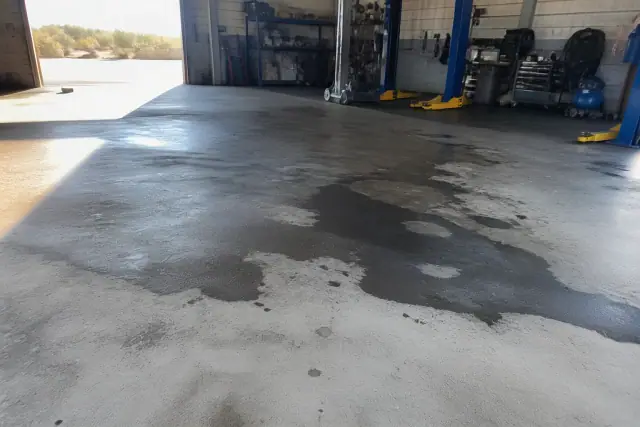
A slab can look clean while residue still blocks adhesion. Sheen or stain patterns help explain why degreasing and grinding are necessary before coating.
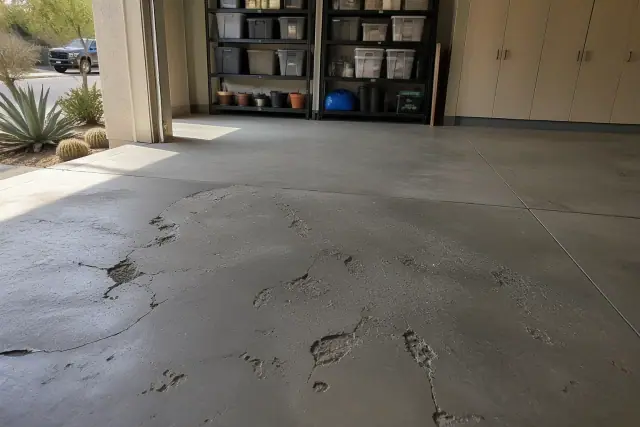
Visible slab damage needs attention before coating. Cracks, broken surface areas, and small pits each require compatible filler before the base coat.
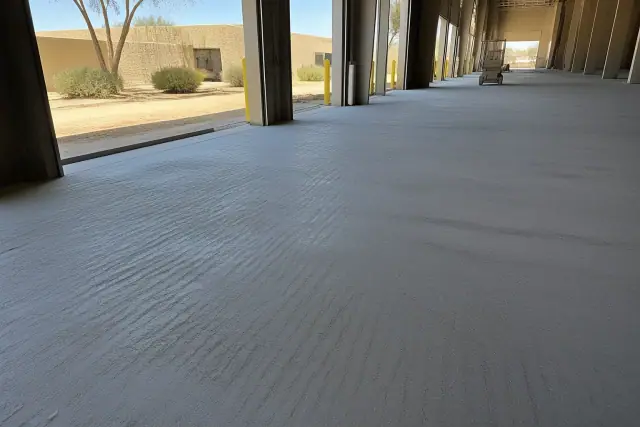
A properly ground slab has a clean, uniform texture rather than a glossy surface. Vacuuming away the dust exposes the profile the coating needs to grip.
Document cracks, stains, spalls, pitting, and any oil residue or curing compound before cleaning begins.
Contamination, existing damage, moisture, and older concrete can each require extra preparation before coating.
Finish cleaning, repairs, profiling, dust removal, and moisture testing before any base coat goes down.
Skipping prep or coating over unprepared concrete is the leading cause of early coating failure the company is called to fix.
| Slab Condition | Required Preparation | Before Coating |
|---|---|---|
| Sound bare concrete | Clean and mechanically profile the surface. | Vacuum dust and review moisture results. |
| Cracks, spalls, or pitting | Patch damage with a compatible filler. | Grind to a uniform coating-ready profile. |
| Oil residue or curing compound | Degrease, pressure wash, and mechanically grind. | Confirm the slab is contaminant-free. |
| Possible vapor issue | Test moisture and relative humidity. | Address the finding before applying the base coat. |
Polyaspartic resin bonds mechanically to concrete rather than chemically. Preparation takes bare concrete from its as-poured condition to a clean, sound, dry, contaminant-free, and mechanically profiled surface the coating can grip; a broom and garden hose alone do not create that surface.
Inspect and document the slab, degrease and pressure wash it, patch damage, then diamond grind the surface. Vacuum and tack away the dust, test for moisture and relative humidity, and prime only when the coating system requires it.
How clean must the slab be? It should be sound, dry, contaminant-free, and profiled to the coating manufacturer's specification. Is primer always needed? Only when the coating system requires it. Do older Phoenix slabs need extra attention? Slabs poured before modern vapor barrier standards often warrant closer moisture review. For a typical Phoenix two-car garage, prep adds a modest amount to the total project cost rather than appearing as a separate line item.
Share the slab condition, visible damage, and any moisture concerns. A floor evaluation can clarify the cleaning, repair, profiling, and testing needed before polyaspartic coating.