10-20 Mils for Most Garage Floors
A professional residential garage floor generally needs 10-20 mils total, with 15 mils representing a typical professional-grade build and 20 mils providing upgraded impact and chemical resistance.
Polyaspartic floor coating usually runs from 6 to 40 mils, but most professional garage floors need 10-20 mils total. Phoenix Epoxy Co. bases the final thickness on the concrete condition, number of coats, traffic load, and exposure across Phoenix-area garages, patios, and commercial floors.
A professional residential garage floor generally needs 10-20 mils total, with 15 mils representing a typical professional-grade build and 20 mils providing upgraded impact and chemical resistance.
Vehicle turning, rolling equipment, oil, brake fluid, industrial solvents, direct UV, cracks, spalling, old coatings, and moisture vapor all affect the appropriate film build.
Use a notched mil gauge while rolling or squeegeeing each coat, check multiple points for thin spots, and confirm dry-film thickness after cure because the resin can shrink slightly.
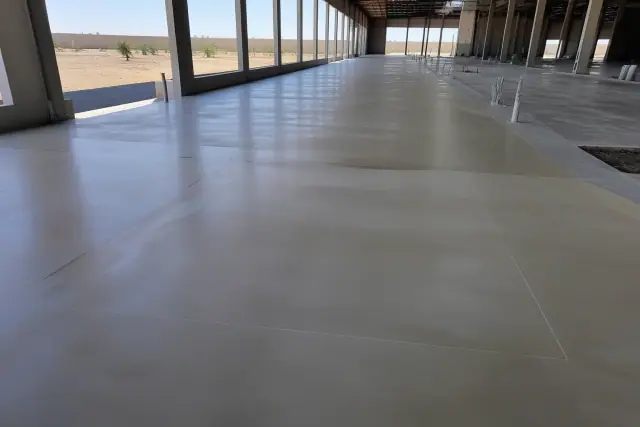
A close cross-section should show the diamond-ground slab, penetrating primer, consistent 6-8 mil wet base coat, decorative broadcast, and clear topcoat. The layers explain why preparation and application depth work together.
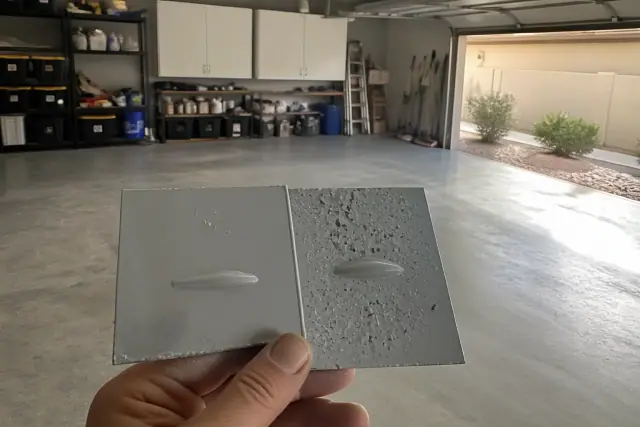
A side-by-side floor profile can contrast a 12-20 mil residential garage system with a 30-40 mil industrial build. The comparison makes the effect of vehicle use, forklifts, and chemical exposure visible.
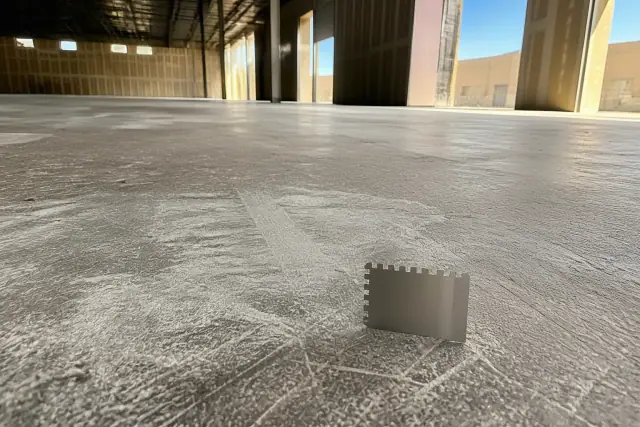
A mechanically profiled concrete slab and a notched gauge checking fresh coating at several points. This demonstrates how installers catch thin areas before the fast-curing film sets.
A 12-20 mil total build is typical for daily vehicles, dropped tools, and hot-tire pickup from asphalt-heated tires in Phoenix summers.
Retail floors, office lobbies, and showrooms commonly use 20-30 mils because heavier foot traffic and rolling equipment carts increase abrasion.
Industrial systems often reach 30-40 mils and may combine polyaspartic with polyurea and broadcast silica aggregate for forklift impact, spill exposure, and slip resistance.
DIY kits often produce only 4-8 mils, below the 10-mil minimum generally accepted for residential durability, so they tend to wear faster under Phoenix heat and UV exposure.
| Floor Use | Typical Total Build | Why It Changes |
|---|---|---|
| DIY coating kit | 4-8 mils | A thinner film wears faster under heat and UV exposure. |
| Light-duty residential | 10 mils minimum | Acceptable baseline for residential durability. |
| Residential garage | 12-20 mils | Handles daily vehicles, dropped tools, and hot-tire pickup. |
| Commercial floor | 20-30 mils | Higher foot traffic and rolling carts increase wear. |
| Industrial floor | 30-40 mils | Forklifts, impact, and chemical exposure require more build. |
One mil equals 0.001 inches, or about 0.0254 millimeters, so a 20-mil floor is only about 0.02 inches-roughly half a millimeter-thick. Polyaspartic generally tops out near a 40-mil practical build, while heavy resinous epoxy repairs can exceed 375 mils, or 3/8 inch. Because a quote for two coats could represent anywhere from 8 to 24 mils, compare written wet- and dry-film targets instead of coat count alone.
Direct-sun slab temperatures can exceed 140°F in Phoenix, while vehicle shear, UV exposure, chemicals, cracks, spalling, and old coatings can call for different preparation or film build. Moisture testing under ASTM F710, diamond grinding to an appropriate ICRI surface profile, and adhesion confirmation consistent with ASTM D4541 matter more than simply adding coating. Primer penetrates rather than adding meaningful film thickness, while clear topcoats for flake or metallic floors generally cover 110-150 square feet per gallon depending on the desired sheen.
For a 200-210 square foot Phoenix-area patio, coating typically costs $1,200-$2,400 depending on preparation, color, and decorative finish. A two-car garage's base coat and flake broadcast may take a couple of hours, but grinding, crack repair, all layers, and finishing generally require a full day; the coating can become tack-free within an hour, allow light foot traffic the same day, and allow vehicles after 24-72 hours. Most concrete benefits from a penetrating primer or bonding base coat, especially when porous or previously coated. With proper preparation, the correct thickness, and normal residential or light-commercial use, polyaspartic flooring typically lasts 20-25 years.
Share the slab condition, floor size, intended traffic, and sun or chemical exposure. A local coating team can confirm the preparation, layer count, and mil target appropriate for the floor.