Match Color to Space Use
A working garage benefits from a finish that hides tire marks and oil residue, while a showroom, office, home gym, or lounge can prioritize brightness, atmosphere, or coordinated color.
At Phoenix Epoxy Co., choosing an epoxy floor color starts with how the space is used, how much light reaches the slab, what dust or tire traffic the finish needs to disguise, and which surrounding finishes it should complement. Base color, flake blend, and topcoat sheen work together, so the best choice balances appearance with day-to-day upkeep. Those decisions matter across Salt River Valley garages, shops, showrooms, and industrial floors.
A working garage benefits from a finish that hides tire marks and oil residue, while a showroom, office, home gym, or lounge can prioritize brightness, atmosphere, or coordinated color.
Gray, charcoal, and multi-color flake blends conceal monsoon dust, tire rubber, footprints, and minor scuffs more effectively than true black, pure white, or a uniform dark finish.
Narrow the choice to two or three physical samples and view them beside the actual walls, cabinetry, stucco, or tile under the room's natural and artificial lighting.
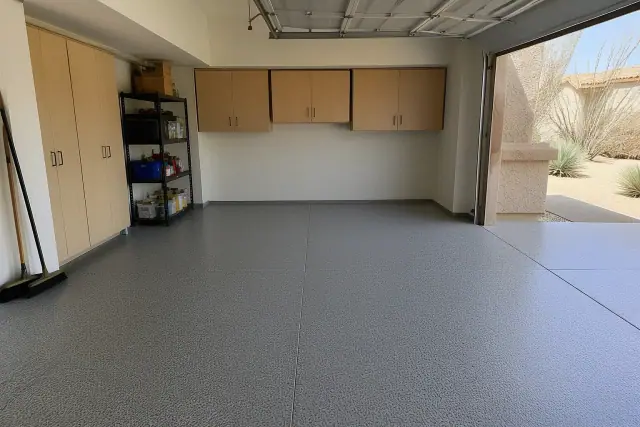
A mid-tone gray flake floor with an open garage door, visible vehicle traffic, and Phoenix dust. The view should reveal how the blend softens everyday marks.
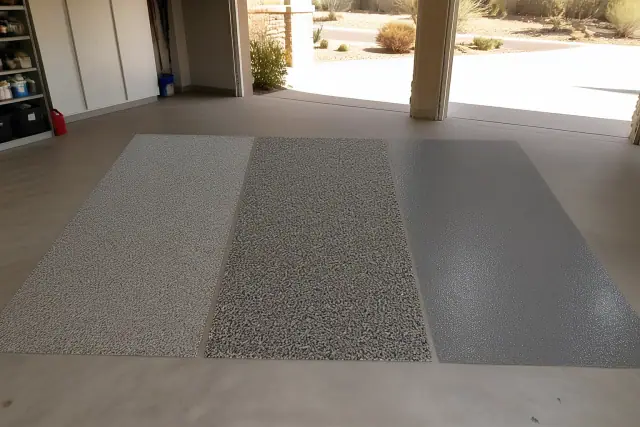
Compare equal floor panels so uniform solid color, blended flake coverage, and mica-driven metallic movement are easy to distinguish.
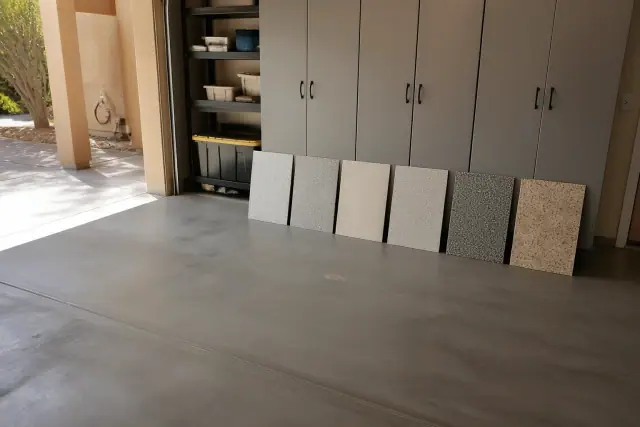
Physical color boards beside the room's fixed finishes under its actual fixtures. This makes lighting shifts and coordination problems visible before installation.
Decide whether the floor must hide vehicle residue and daily foot traffic or create a brighter, warmer, cooler, or more distinctive atmosphere.
A dim north-facing garage makes colors read darker and flatter, while patched or porous concrete often looks more even beneath flake or metallic movement than a dark solid coat.
Slate gray, steel gray, charcoal, and balanced flake blends remain practical choices because they do not compete with vehicles or equipment and conceal routine dust and marks.
True black reveals dust and fine scratches, while pure white shows oil and rubber quickly. Where direct sunlight reaches the floor, a UV-stable topcoat helps prevent the ambering or yellowing that unprotected standard epoxy can develop within a few years.
| Space or Priority | Color Direction | Why It Fits |
|---|---|---|
| Working garage | Mid-tone gray or charcoal flake | Hides Arizona dust, tire marks, and minor slab variation. |
| Dim garage or shop | Lighter gray or cool tone | Brightens the room; verify oil and rubber visibility on a cured sample. |
| Southwestern exterior | Tan, beige, or warm flake blend | Coordinates with stucco, terracotta tile, clay, and sand tones. |
| Showroom or statement space | Metallic or custom blend | Adds movement or coordinated color; each metallic pour varies. |
| Commercial or industrial floor | Neutral gray or dark field | Handles visual traffic; safety yellow can define walkways and equipment zones. |
The right color supports the room's job before it supports a style preference. Warm terracotta, amber, and tan can make lounges or home gyms feel inviting; cool blues, grays, and silver metallics can make offices or dim garages feel brighter; and neutral gray or charcoal stays practical around vehicles, equipment, and changing decor. Metallic finishes create one-of-a-kind movement, while custom flake blends can coordinate with cabinetry, trim, or an established color palette.
A north-facing garage with one bulb makes colors appear darker and flatter than a shop with skylights or LED high-bays. Phoenix homes built before the 1990s may have more porous, varied concrete that exposes patches beneath dark solid color, while newer, more consistent slabs can take a uniform finish more evenly. Direct sunlight and summer slab temperatures that can exceed 140 degrees make UV stability important; polyaspartic topcoats cure faster than standard epoxy and hold color better under those conditions.
Mid-tone gray and charcoal flake blends are the most requested Phoenix garage colors because they hide dust, tire marks, and daily wear. A 20x20 garage is 400 square feet; at typical installed pricing of $8 to $14 per square foot, full installation generally runs between $3,200 and $5,600 depending on surface preparation, crack repair, flake broadcast, and topcoat. Solid-color epoxy materials run roughly $3 to $7 per square foot, while metallic epoxy materials run $9 to $12 per square foot. Custom colors and flake combinations can coordinate with exterior stucco, roof tile, cabinetry, or trim, and a properly installed system with a UV-stable topcoat should hold its color for 10 to 20 years under normal residential traffic. For upkeep, dust mop weekly, damp mop with a neutral-pH cleaner, and avoid harsh solvents that can dull the topcoat.
An on-site epoxy floor color consultation typically takes 30 to 45 minutes and compares physical color boards, flake blend cards, and metallic samples under the room's actual lighting. A written scope can confirm the base color, flake blend, and topcoat sheen before material is ordered.