Prep-Dependent Adhesion
Epoxy bonds only as well as the slab is profiled and cleaned. Sealer, oil, curing concrete, cracks, or moisture can turn skipped preparation into peeling and delamination.
Phoenix Epoxy Co. has installed and repaired coatings on residential and commercial concrete floors across the Valley, including Ahwatukee and Deer Valley. The main downsides of epoxy are its dependence on thorough slab preparation, higher upfront cost, cure time, slickness when wet, and sensitivity to moisture, heat, and UV exposure. Understanding those limits matters because epoxy bonds to the concrete beneath it rather than replacing the slab.
Epoxy bonds only as well as the slab is profiled and cleaned. Sealer, oil, curing concrete, cracks, or moisture can turn skipped preparation into peeling and delamination.
Standard epoxy can soften beneath hot tires and amber after months of direct sunlight. West-facing garage doors and covered patios need a UV-stable, more heat-tolerant finish layer.
High-gloss epoxy loses traction when wet, oily, or dusty, while grit, dropped tools, and dragged furniture can scratch it. Flake finishes hide scuffs better than solid colors, but they do not replace routine cleaning.
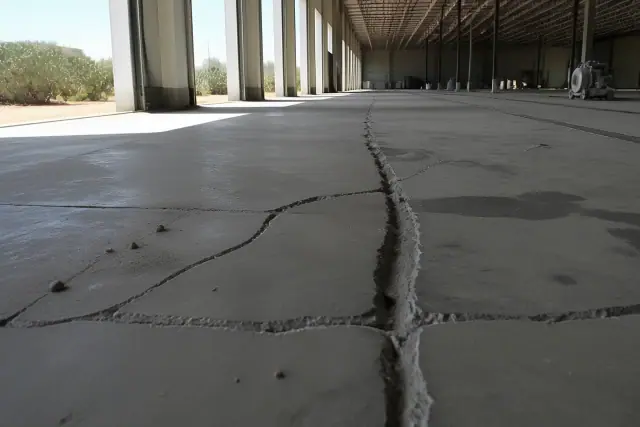
A concrete slab being mechanically opened before coating, with cracks chased and filled. This preparation is what gives epoxy a reliable surface to grip.
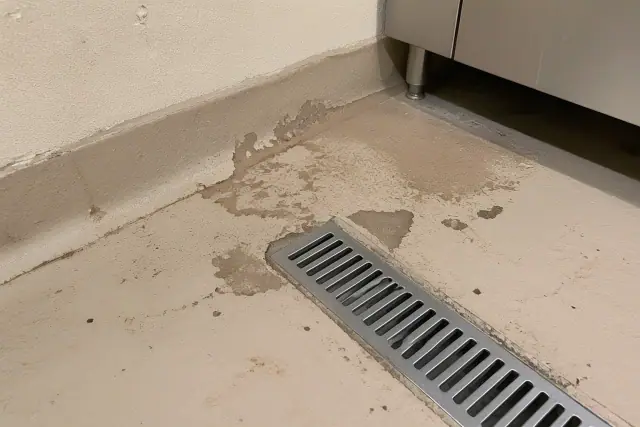
Lifting or flaking where moisture enters near an expansion joint, floor drain, or doorway edge. These are common places for adhesion failure to become visible first.
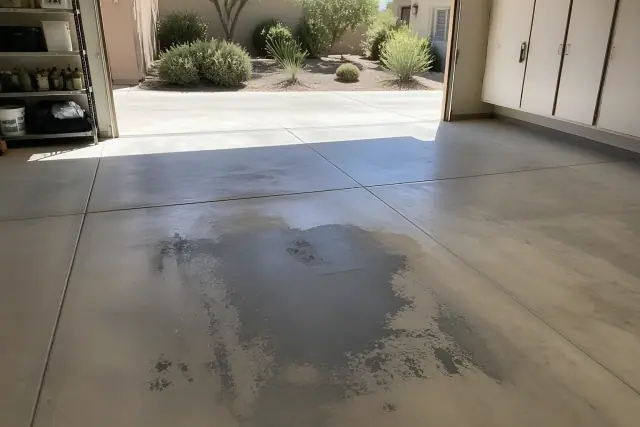
Tire-turning areas beside a west-facing garage opening with direct sunlight crossing the floor. These zones reveal softening, pickup, ambering, and wear sooner than shaded low-traffic areas.
Resin materials alone typically run $1.45 to $3.60 per square foot, before grinding, crack repair, flakes, metallic effects, or a topcoat.
Full hardening typically takes 24 to 72 hours after application, depending on temperature and humidity. The floor must stay out of normal use during that installation window.
A correctly installed epoxy system can last 5 to 20 years. Installation quality, build thickness, traffic, topcoat chemistry, and maintenance account for the wide range.
Painting over an unprofiled slab saves time only at the start. Mechanical grinding, crack work, contaminant removal, and moisture testing are the main defenses against premature failure.
| Slab or Use Condition | Main Epoxy Risk | What to Verify |
|---|---|---|
| Sealed, oily, or smooth concrete | Weak adhesion, peeling, and delamination | Mechanical profiling and contaminant removal |
| Cracks or moisture vapor | Telegraphing, bubbles, and flaking | Crack repair, moisture testing, and mitigation needs |
| Direct sun or hot-tire zones | Ambering, softening, and tire pickup | UV-stable, heat-tolerant topcoat options |
| Wet, oily, or high-traffic areas | Slipping, scratches, and visible wear | Flake or grit traction and abrasion resistance |
Epoxy cannot correct a compromised slab; it mirrors and depends on the concrete below. Hairline cracks, oil, sealer, inadequate profiling, and moisture vapor can cause bubbles, peeling, delamination, or flaking. Because epoxy creates a largely vapor-impermeable membrane, grade-level Phoenix slabs over expansive or caliche-heavy soils may also blister when trapped moisture builds pressure beneath the coating.
Diamond grinding or shot blasting should open the slab to a Concrete Surface Profile of 2 to 4 under ICRI guidance, cracks should be chased and filled, and moisture should be checked under ASTM F2170 before coating. Resin grade and build thickness also matter: thin single-coat applications wear faster, while 100% solids multi-coat systems and a compatible polyaspartic or polyurea topcoat better handle abrasion, heat, and UV. With Phoenix averaging over 300 sunny days a year, west-facing bay doors and covered patios require extra attention to sunlight, while oily, dusty, or wet areas may need traction treatment tested to ASTM D2047.
Does epoxy chip easily? A correctly built system resists dropped tools and rolling carts better than a thin, single-coat DIY application, though thresholds and tire-turning zones remain vulnerable. Is cured epoxy safe in a home? Once hardened, it is inert and does not normally off-gas, but uncured resin and hardener can irritate skin, eyes, and airways, so low-VOC materials, forced ventilation, nitrile gloves, and organic-vapor respiratory protection matter during installation. Is epoxy a good fit for every room? Garages, workshops, and finished basements are stronger candidates; polished or stained concrete may better suit interior living spaces where sunlight, feel, or appearance matters.
Share how the floor is used, what the slab looks like, and whether it sees moisture, hot tires, direct sun, or chemicals. A local team can help compare preparation and coating options before you approve the work.