Expected Lifespan
Residential metallic epoxy floors generally last 10-20 years, while high-traffic commercial or industrial floors often need a recoat after 5-10 years.
Phoenix Epoxy Co. typically sees properly installed metallic epoxy floors last 10 to 20 years in Phoenix residential spaces, while high-traffic commercial or industrial floors often need a recoat after 5-10 years. Preparation, topcoat choice, traffic, sunlight, chemical exposure, and routine care determine where a floor lands within those ranges.
Residential metallic epoxy floors generally last 10-20 years, while high-traffic commercial or industrial floors often need a recoat after 5-10 years.
Diamond grinding to ICRI CSP 3-5, slab moisture testing, a 100% solids epoxy, and a UV-stable topcoat help the coating bond and resist wear.
Sweep weekly, clean spills promptly with a pH-neutral cleaner, and plan a maintenance topcoat every 3-5 years in residential settings.
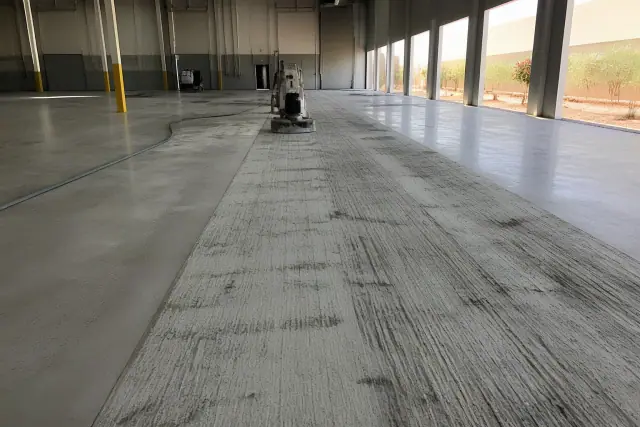
The textured concrete profile created by diamond grinding before primer. That profile and moisture testing help prevent peeling, bubbling, and early delamination.
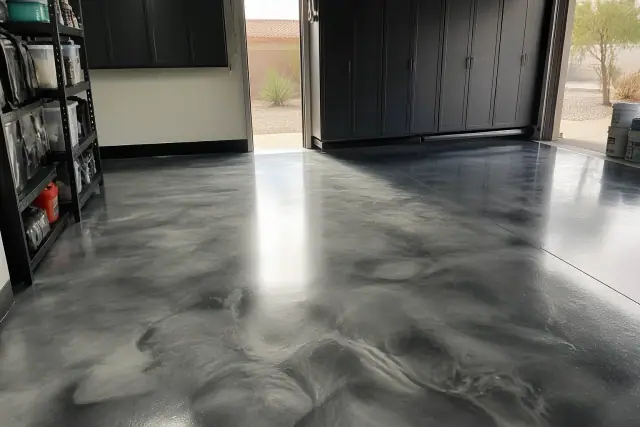
Primer, metallic pigment, and a polyaspartic or polyurethane topcoat as a layered floor cross-section. The protective layer matters where direct Phoenix sunlight reaches the slab.
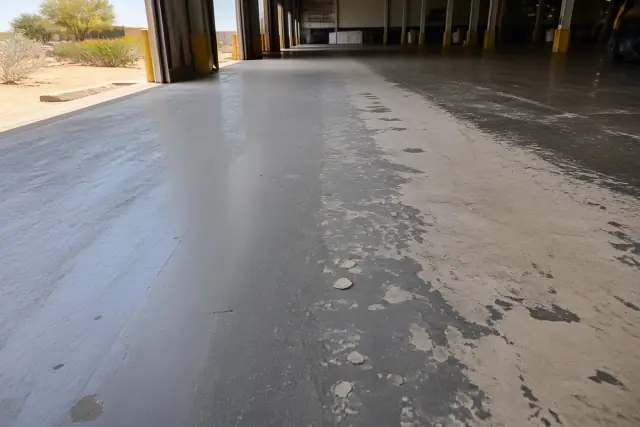
Contrast minor dulling, scratches, or isolated hot-tire pickup with widespread peeling and hollow areas. The first group may need a recoat; broad bond failure can require replacement.
Expect 10-20 years under light to moderate traffic, with wear usually appearing first as cosmetic dulling or scratching.
Expect about 7-12 years with moderate foot traffic and occasional equipment before the finish needs renewal.
Expect a recoat within 5-10 years where forklifts, heavy machinery, or chemical exposure place more stress on the coating.
Failure within 1-4 years is common when the slab preparation is inadequate or the applied coating lacks professional mil thickness.
| Option | Typical Cost | Service-Life Context |
|---|---|---|
| Professional metallic system | $8-$15 per square foot installed | Includes diamond grinding, moisture testing, primer, metallic base coat, and a protective topcoat. |
| Standard two-car garage | About 400-500 square feet and $3,200-$7,500 | Final cost varies with design complexity, metallic colors, and substrate condition. |
| DIY kit materials | $2-$5 per square foot | Inadequate preparation and thinner mil thickness can lead to failure within 1-4 years. |
| Metallic finish premium | Typically $2-$5 more per square foot than solid-color or flake epoxy | The pigment pattern is created by hand, so installation skill affects the finished result. |
A correctly installed primer, metallic pigment layer, and protective topcoat commonly lasts 10 to 15 years under normal residential use, while low-traffic Phoenix spaces protected by a polyaspartic topcoat can reach 15-20 years or longer. A 10-year baseline is reasonable for a residential garage or living-space floor when the slab is properly prepared and moisture-tested; lighter traffic, minimal chemical exposure, and routine care can make 20 years realistic.
Skipping mechanical diamond grinding for an acid etch, or coating a slab without ASTM F2170 moisture testing, can lead to peeling or bubbling within the first two years. A 100% solids epoxy with a polyaspartic topcoat withstands abrasion and UV better than a water-based kit, while forklift traffic, chemical exposure, hot tires, summer sun, and monsoon-season humidity swings accelerate wear compared with a two-car residential garage.
Minor scratching, fading, or isolated hot-tire pickup can usually be repaired and recoated, but large hollow-sounding delaminated areas, structural concrete cracks, or a substrate weakened by multiple recoats can require full replacement. Sweep or dust-mop weekly, use a pH-neutral cleaner instead of ammonia or vinegar, and promptly remove automotive fluids, fertilizer, and pool chemicals. Reapply a residential maintenance topcoat every 3-5 years, sooner when a garage sees daily vehicle traffic.
Share the floor's age, traffic level, sunlight exposure, maintenance history, and any peeling, cracks, or hollow-sounding areas. A local epoxy professional can assess the substrate and explain whether spot repair, recoating, or full replacement fits the floor's condition.