Polyaspartic for Heat and UV
Polyaspartic is often the strongest all-around choice for a Phoenix garage because it cures in hours, resists UV yellowing better than standard epoxy, and tolerates hot-tire pickup without softening.
Phoenix Epoxy Co. installs residential coating systems across the Salt River Valley, and for most Phoenix homes a polyaspartic coating or broadcast flake epoxy offers the best balance of durability, appearance, desert-heat performance, and UV resistance. The final choice depends on the room, concrete slab condition, moisture exposure, sunlight, and whether the floor sees foot or tire traffic.
Polyaspartic is often the strongest all-around choice for a Phoenix garage because it cures in hours, resists UV yellowing better than standard epoxy, and tolerates hot-tire pickup without softening.
Colored vinyl chips broadcast into a base coat add traction, conceal hairline cracks and minor imperfections, and create a forgiving finish for older central Phoenix concrete.
Compare room use, slab condition, moisture readings, UV exposure, traffic, and desired appearance before choosing a system; preparation needs differ sharply between garages and living spaces.
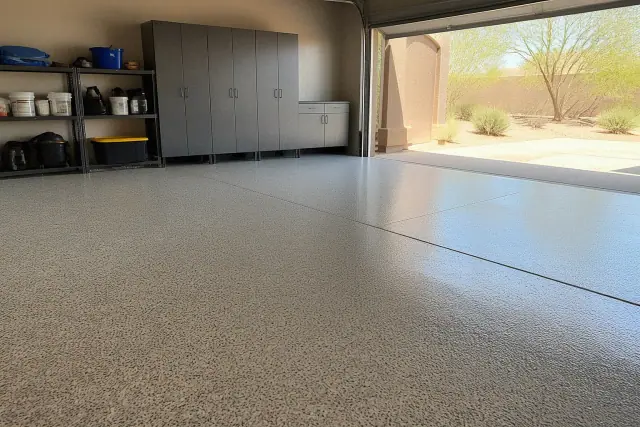
Tire paths, direct-sun exposure, and textured coating so homeowners can compare hot-tire performance and traction in the room where those traits matter most.
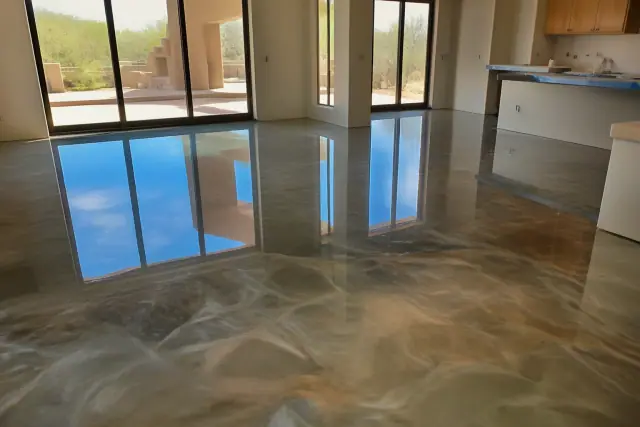
The marbled, three-dimensional movement that suspended pigment can create in an entry or great room, where appearance carries more weight than garage traction.
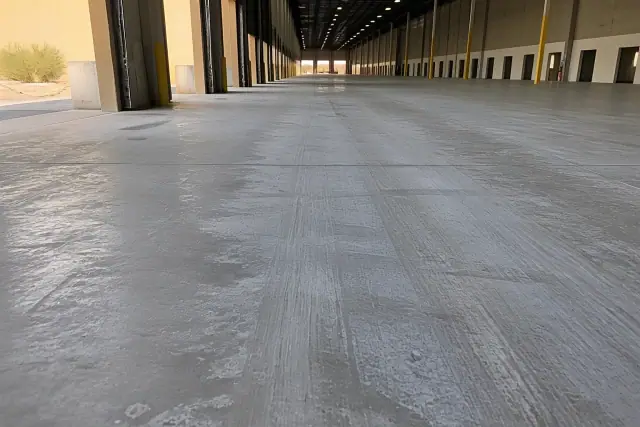
Failed paint or sealer being removed and the concrete mechanically profiled, because a clean diamond-ground surface gives the new system its mechanical bond.
Polyaspartic has the edge in sun-exposed Phoenix garages, where summer pavement and floor temperatures can climb well above 100 degrees and hot tires challenge softer coatings.
Broadcast flake epoxy adds useful texture and visually breaks up minor surface flaws, making it a practical fit for garages, patios, and other floors where slip resistance matters.
Metallic epoxy is the premium choice when a showcase garage, entry, or great room calls for a high-end marbled finish instead of a uniform solid color or flake pattern.
Skipping mechanical preparation or moisture testing can lead to peeling, bubbling, delamination, or hot-tire lifting; never coat directly over failing paint, sealers, or old coatings.
| Home setting | Best starting option | Why it fits | Typical installed cost |
|---|---|---|---|
| Sun-exposed Phoenix garage | Polyaspartic coating | Fast cure, stronger UV stability, and hot-tire resistance | $4-$9 per sq ft |
| Older garage needing traction | Broadcast flake epoxy | Textured finish helps hide minor slab imperfections | $2,500-$3,500 for a two-car garage |
| Budget-focused garage | Solid-color epoxy | Durable, chemical-resistant coverage without a decorative effect | $2,000-$3,000 for a two-car garage |
| Showcase garage, entry, or great room | Metallic epoxy | Marbled, three-dimensional decorative finish | $4,000-$7,000 |
| Coating-free concrete refinish | Grind and seal | Lower-cost, low-maintenance concrete appearance | $2-$5 per sq ft |
Residential epoxy flooring is a two-part epoxy or polyaspartic resin system installed over properly prepared concrete to create a smooth, chemical-resistant membrane. Solid colors provide straightforward coverage, flake or quartz media add texture and traction, and metallic pigment creates decorative movement; polished concrete instead leaves a coating-free finish with less color and texture range.
Garages prioritize chemical resistance, impact resistance, hot-tire performance, and dropped-tool durability, while basements and bathrooms need moisture-barrier preparation and slip resistance. Kitchens benefit from easy-clean resistance to grease and spills, living rooms and entries favor decorative finishes, and bedrooms may only need clear or colored epoxy over polished or stained concrete. A 1,000-square-foot residential area typically runs roughly $4,000-$9,000, with grinding, crack repair, moisture testing, finish choice, and overall slab condition shifting the final quote.
Standard two-part epoxy typically needs 24-72 hours before light foot traffic and about a week before full vehicle traffic; polyaspartic may allow foot traffic within hours and vehicle traffic within a day or two. Existing garage floors can usually be coated after failed paint or sealers are removed and the concrete is diamond-ground, but epoxy is engineered for concrete rather than wood subfloors. Maintain a coated floor with regular sweeping, occasional mopping with a neutral cleaner, prompt spill cleanup, and no harsh solvents or abrasive pads. For direct-sun areas, lighter colors can reduce surface heat buildup, while covered garages and interior spaces are less affected.
Share the room, slab condition, moisture or sun exposure, traffic, and desired look. A local flooring team can compare preparation needs, finish options, cure windows, and a system-specific estimate before work begins.